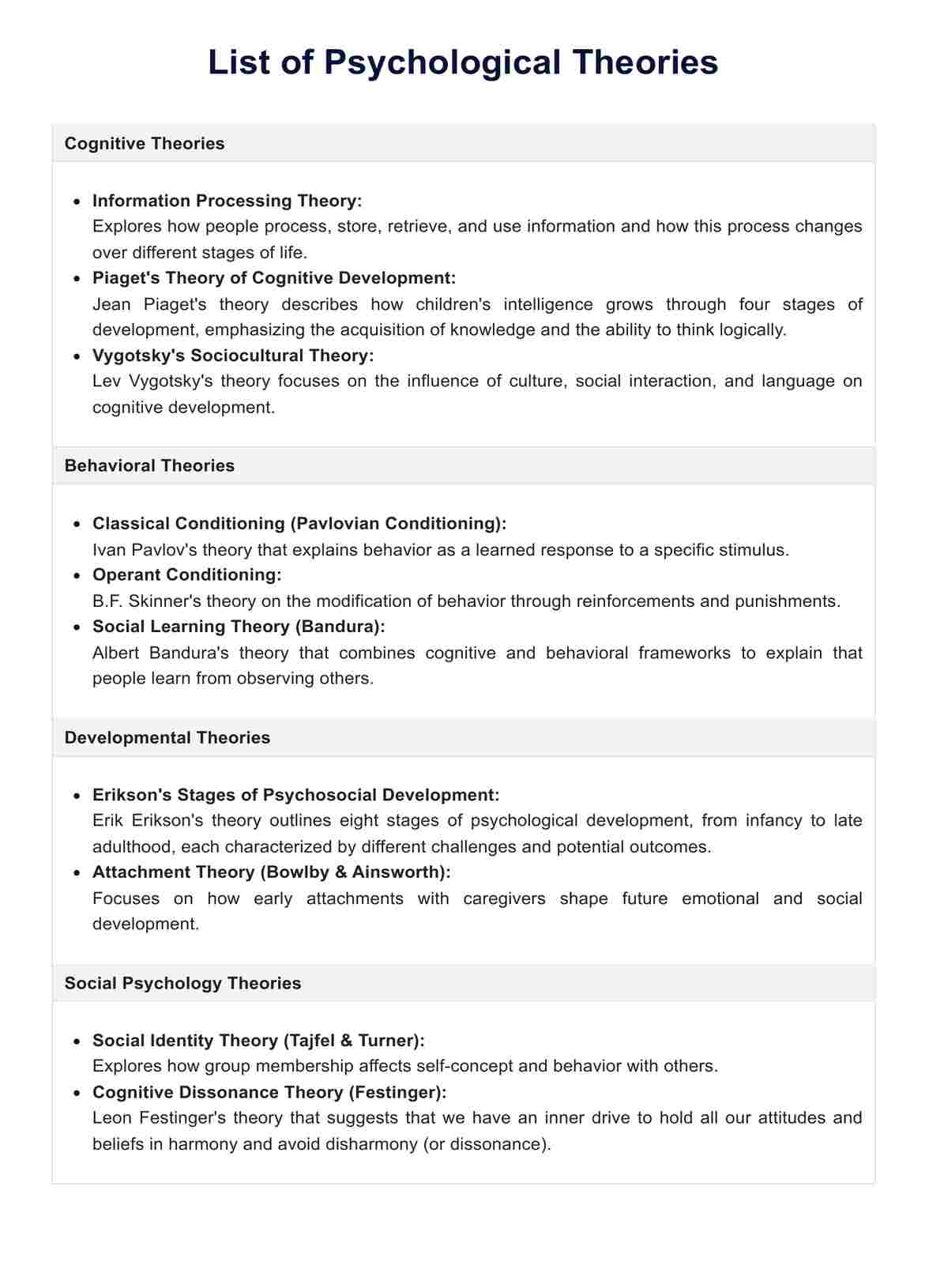
Importance of psychology theories
The significance of psychological theories extends far beyond academic discourse, touching every aspect of how we comprehend human nature and the intricacies of the mind.
These theories are abstract concepts that shape our approach to mental health, education, and interpersonal relationships. Here's a deeper look into the importance of psychological theories:
Framework for understanding
Psychological theories offer structured frameworks to understand complex human behaviors and mental processes. By categorizing and explaining different aspects of human psychology, these theories help us navigate the mind's vast and often intangible aspects.
Guiding research and discovery
They are the bedrock upon which psychological research is built. Theories prompt questions, guide hypotheses, and inform the design of studies. This ongoing cycle of theory and research drives the field forward, leading to discoveries and insights about human behavior.
Informing clinical practice
For mental health professionals, psychological theories are essential tools. They inform assessment techniques, therapeutic approaches, and intervention strategies, allowing practitioners to tailor their methods to the individual needs of their clients.
Understanding the theoretical underpinnings of various disorders and treatments enables clinicians to provide more effective and compassionate care.
Enhancing educational strategies
In educational settings, psychological theories inform teaching methods and learning strategies. For example, developmental psychology concepts help educators design age-appropriate curricula that align with students' cognitive and emotional development stages, optimizing learning outcomes.
Improving interpersonal relationships
At a more personal level, knowledge of psychological theories can enhance interpersonal relationships. Understanding theories related to communication, social behavior, and personality can help individuals navigate their social worlds more effectively, leading to more meaningful and satisfying relationships.
Promoting personal growth
Psychological theories also offer pathways to self-understanding and personal growth. By reflecting on personality, motivation, and emotion theories, individuals can gain insights into their behaviors and thought patterns, fostering self-awareness and personal development.
Shaping social policy
Beyond individual and clinical applications, psychological theories influence social policy and public health initiatives. They inform approaches to education, criminal justice, workplace dynamics, and health promotion, contributing to the well-being of communities and societies.
Psychological theories are not merely academic; they are deeply woven into the fabric of everyday life. They empower us to understand ourselves and others better, enhance the effectiveness of mental health treatments, improve educational practices, and contribute to society's overall well-being.