Benefits of using this scale
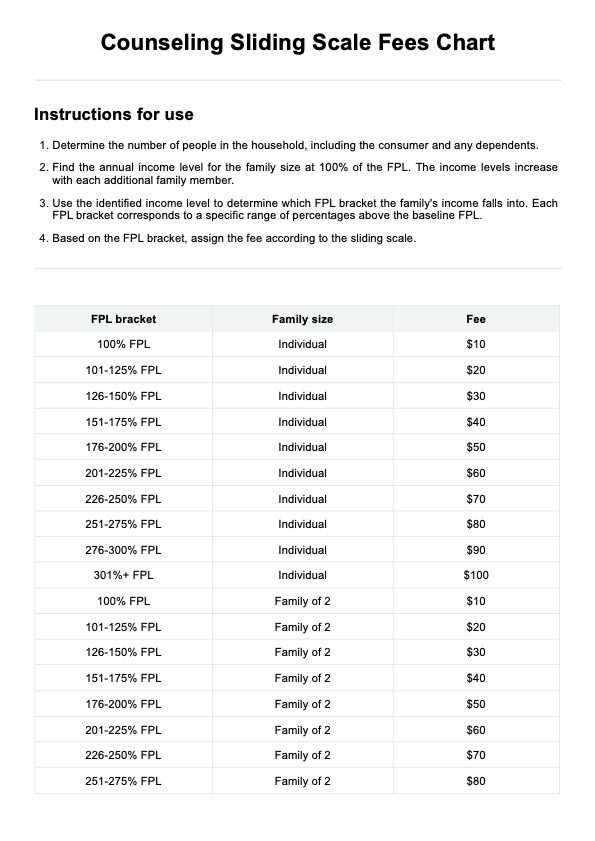
Using sliding scale fees in counseling offers several benefits that can enhance access to mental health services and support the sustainability of counseling practices. Here are some of the key advantages of set sliding scale fees:
Increases accessibility
By using payment plans and adjusting fees based on a client’s ability to pay, counselors can provide services to a wider range of clients, including those who might otherwise be unable to afford therapy. This can be especially important in communities with limited access to mental health resources.
Supports inclusivity
Sliding a sliding scale policy on fees helps make counseling more inclusive by breaking down financial barriers that can prevent individuals from diverse socioeconomic backgrounds from seeking help.
Encourages a broader client base
For counselors starting therapy out, a sliding scale can attract a more diverse client base, enriching the practice and providing stability through a broader range of clients who might seek long-term services.
Reduces stigma
Offering a sliding scale can also reduce the stigma of seeking mental health support, as it emphasizes the financial need, the counselor’s commitment to access, and equity over profit.
Improves outcomes
When financial stress is not a barrier, clients are more likely to decide to continue therapy as needed rather than stopping prematurely due to costs. This can lead to better therapeutic outcomes.
Flexibility in pricing
Counselors have the flexibility to adjust fees as necessary, which can help them manage the financial health of their practice without compromising the quality of their services or their clients' financial well-being.