





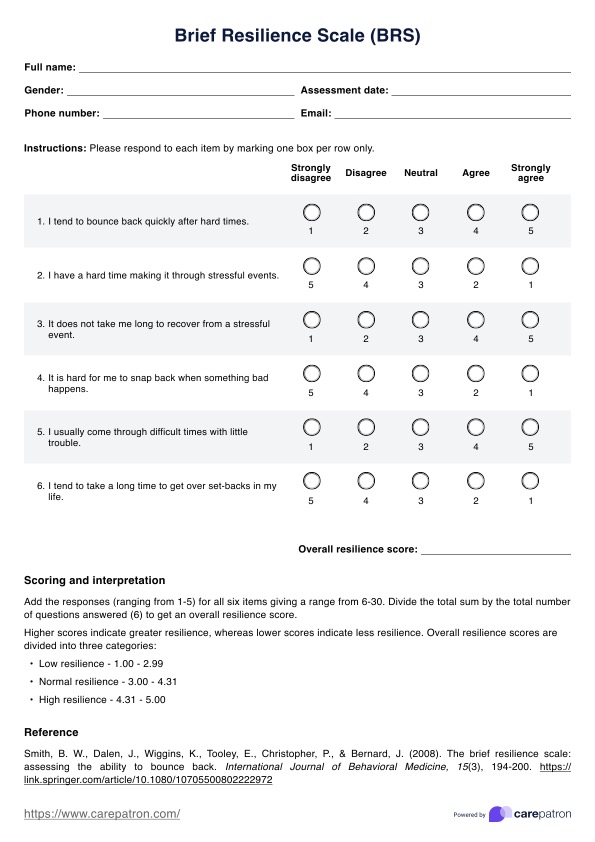



What is the Brief Resilience Scale (BRS)?
The Brief Resilience Scale (BRS) is a psychological measure designed to quantify a person's ability to 'bounce back' or recover from stressful events or trauma. Participants are asked to rate the extent to which they agree with six key statements designed to assess resilience. Answer scores are added to give an overall score of perceived stress resistance.
The BRS is a new resilience scale designed to quickly and accurately assess an individual's psychological reserve during extreme stress or trauma. Resilience (specifically defined as the perceived ability to bounce back following stressful events) is the sole psychometric construct measured.
BRS can be a convenient screening tool for identifying which individuals are likely to require psychological support or intervention following trauma exposure. This is especially useful when a comprehensive psychological assessment is not feasible, or when large groups of people need to be screened.
The BRS is a versatile tool that provides valid information about people coping with a range of stressors, including people recovering from trauma or health-related stressors, such as chronic pain patients.
Like other resilience measures that rely on self-report data, the BRS is subject to reporter biases and demand characteristics that can impact the objectivity of the results. However, unlike other resilience measures, it does not measure factors that may promote resilience such as personal characteristics or social support.









