




What is the Social Avoidance and Distress Scale (SADS)?
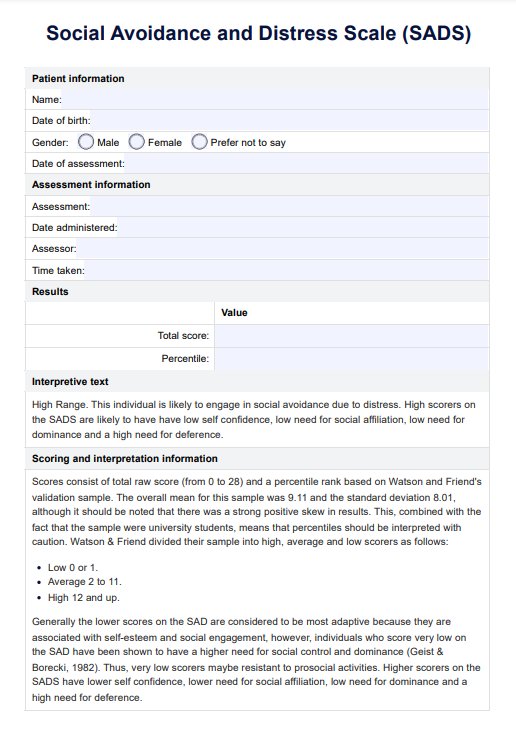
The Social Avoidance and Distress Scale (SADS) is a psychological assessment tool commonly used in clinical psychology to measure the level of anxiety and avoidance behaviors in social situations. It is particularly useful in diagnosing affective disorders, such as social anxiety and other anxiety disorders. The scale evaluates the extent of social evaluative anxiety and is applicable to a range of psychiatric disorders, including mood disorders and pervasive developmental disorders.
Developed to aid in the identification of diagnostic criteria for social anxiety, the SADS provides valuable insights into an individual's social functioning. It is often used alongside other assessment tools, such as the State-Trait Anxiety Inventory, to provide a comprehensive understanding of a patient's anxiety levels. The scale is also suitable for use with school-aged children, helping to identify early signs of social anxiety and related issues. By providing a standardized measure, the SADS helps clinicians develop targeted treatment plans and track the progress of interventions aimed at reducing social anxiety and improving overall social functioning.









