
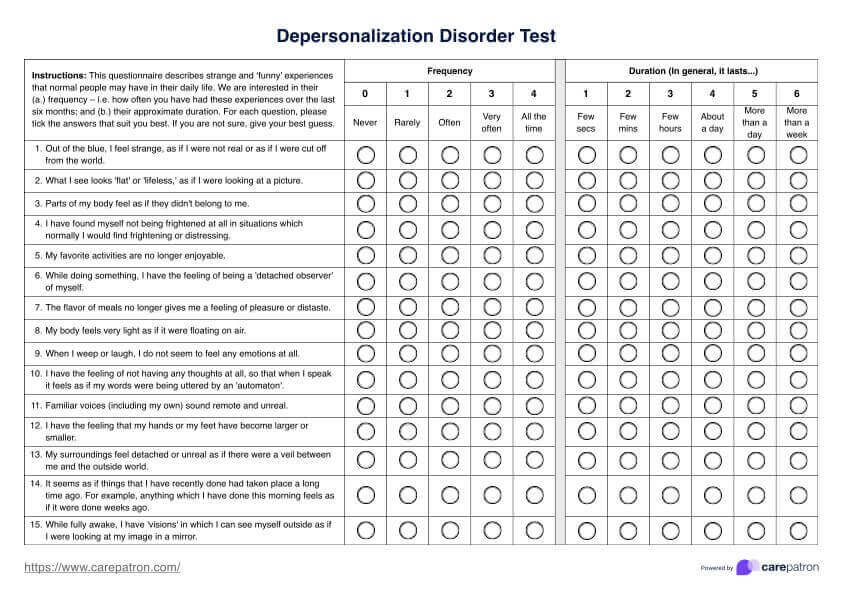




What is depersonalization-derealization disorder (DPDR)?
Depersonalization-derealization disorder (DPDR) is a complex mental health condition characterized by persistent or recurrent feelings of detachment from one's thoughts, emotions, body, or surroundings. Individuals with DPDR often describe feeling as if they're observing themselves from outside their body or perceiving the world around them as unreal or dreamlike.
Depersonalization-derealization symptoms
DPDR is classified as a dissociative disorder in the Diagnostic and Statistical Manual of Mental Disorders, Fifth Edition (DSM-5) (American Psychiatric Association, 2013). Symptoms of this disorder can be broadly categorized into two main types:
Depersonalization symptoms include the following:
- One may feel detached from one's thoughts or body
- Sense of being an outside observer of one's thoughts, feelings, or actions
- Feeling emotionally or physically numb
- Distorted sense of time
- One may feel disconnected, like one's body or parts of it are unreal or don't belong to oneself
On the other hand, derealization symptoms are as follows:
- Feeling as if the world around is unreal, dreamlike, or foggy
- Perception of objects as changed in size, shape, or color
- Feeling emotionally disconnected from familiar people
- A sense that the environment is artificial or lacking in spontaneity
These symptoms can vary in intensity, may fluctuate over time, and can also co-occur with other mental health conditions.
How does this disorder develop?
The exact causes of depersonalization and derealization, along with other dissociative disorders, are not fully understood, but several factors are thought to contribute to its development:
- Trauma: Severe or significant distress or traumatic experiences, particularly in childhood, can trigger dissociative symptoms as a coping mechanism. Symptoms of this disorder can also be present in post-traumatic stress disorder.
- Neurobiological factors: Research suggests that alterations in brain areas involved in sensory integration and emotional processing may play a role in DPDR.
- Anxiety and depression: These conditions often co-occur with DPDR and may exacerbate symptoms.
- Substance use: Certain drugs, particularly cannabis, can induce depersonalization or derealization experiences in some individuals.
- Personality traits: Some studies have found associations between DPDR and traits such as emotional vulnerability and tendency towards introspection.
Understanding these potential contributing factors can help in developing targeted treatment approaches and providing comprehensive care for individuals with these mental health conditions.









