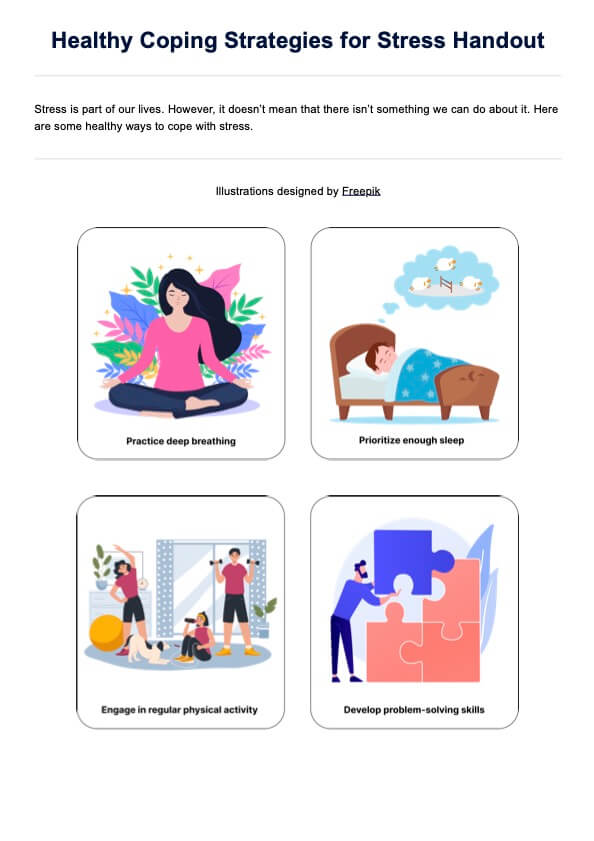
10 Healthy Coping Strategies for Stress
People have different coping styles, and clients will probably disclose how they handle life's stressors during your sessions. Some may have turned to alcohol, substance use, isolation, or overeating. This discussion is an excellent starting point to help them realize that these are unhealthy ways of coping. You can then introduce them to these 10 healthy ways for stress management.
1. Practice deep breathing
Deep breathing can calm someone's mind and reduce stress. Encourage clients to focus on breathing, which helps them manage stress and brings their bodies back to a state of relaxation.
2. Prioritize enough sleep
We can't stress enough how important sleep is to mental health. Quality sleep enables one to cope better with life's challenges. Highlight the importance of getting enough sleep each night to maintain emotional equilibrium and manage stress effectively.
3. Engage in regular physical activity
Exercise is a proven method for managing stress and improving mental and physical health. Suggest incorporating regular physical activity into their routines to release tension and boost their mood.
4. Develop problem-solving skills
One of the reasons why people are stressed is because they are overwhelmed by a particular problem. This coping strategy can significantly affect how they tackle stressful situations head-on.
5. Build social support networks
There is power in making connections. Instead of isolating themselves, encourage clients to find a support group or network. For those who may find it challenging, especially introverts, remind them that they don't need to join a large group. A small, meaningful circle where they share interests and trust can be equally valuable.
6. Practice relaxation exercises
When life seems to be tough, sometimes all one needs to do is pause and take time to relax. Introduce relaxation exercises, such as yoga or meditation, into their daily routines. These activities help to reduce stress levels and promote a sense of calm.
7. Engage in leisure activities
Like a device, we also run out of battery and need a recharge to function well. Recommend that they spend time on hobbies and activities they enjoy. Leisure activities can provide a healthy distraction from stress and help them recharge.
8. Maintain a healthy diet
Stress can lead to overeating. However, a poor diet may also be the cause of stress. When one doesn't receive proper nutrition, it can manifest in their daily endeavors. Remind your clients to be mindful of eating behaviors and maintain a well-balanced diet to nourish their bodies and minds.
9. Practice positive thinking
Help your clients challenge negative thoughts and gradually replace them with positive ones. A positive mindset can be an effective tool for managing stress and improving overall well-being. For clients who struggle with this coping skill, particularly those with a history of anxiety, emphasize that change takes time. Encourage a gradual shift in thinking, allowing them to transform their thoughts comfortably. Remind them that this process doesn't happen overnight, which can help them feel more at ease and less pressured.
10. Focus on proactive coping
Proactive coping involves building resources to achieve challenging goals and facilitate personal growth. Proactive individuals are motivated, committed to high standards, and take constructive action to meet future demands and opportunities (American Psychological Association, 2018; Ersen & Bilgiç, 2018). Advise clients to pursue new challenges, create opportunities, and promote progress toward goals.