






What is a disorganized attachment style?
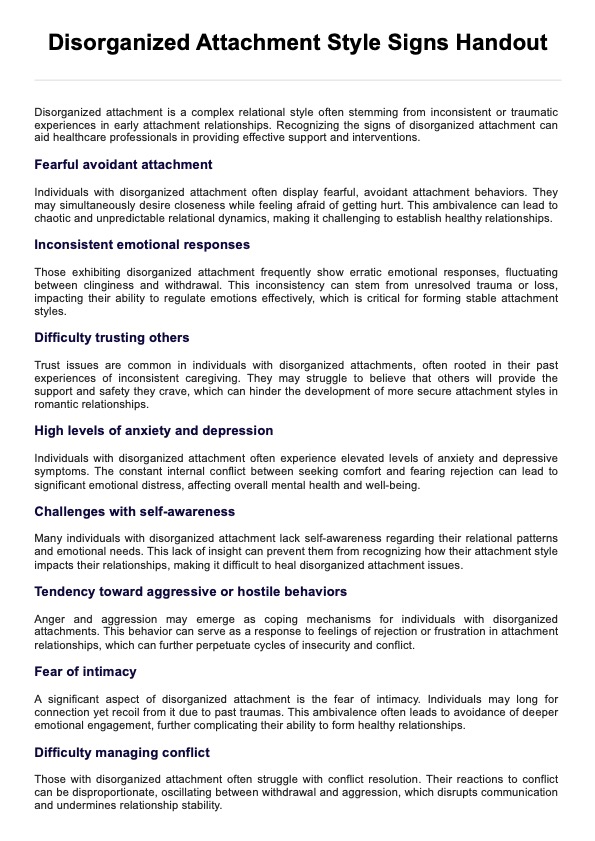
Disorganized attachment is a complex attachment style that often emerges in response to inconsistent caregiving during early childhood. Infants categorized as having disorganized attachments display conflicting behaviors towards their caregivers, changing between seeking comfort and exhibiting fear or avoidance. This pattern is rooted in attachment theory, which posits that early relationships shape emotional and relational outcomes throughout life (Paetzold, Rholes, & Kohn, 2015).
Individuals with a disorganized attachment style may struggle with self-esteem and often find it challenging to form healthy relationships. The inconsistency experienced during childhood can lead to insecure attachment in adulthood, affecting mental health and the ability to develop self-awareness. These adults may display similar internalizing and externalizing behaviors seen in their early years, indicating a lack of coherent coping strategies in stressful situations.









