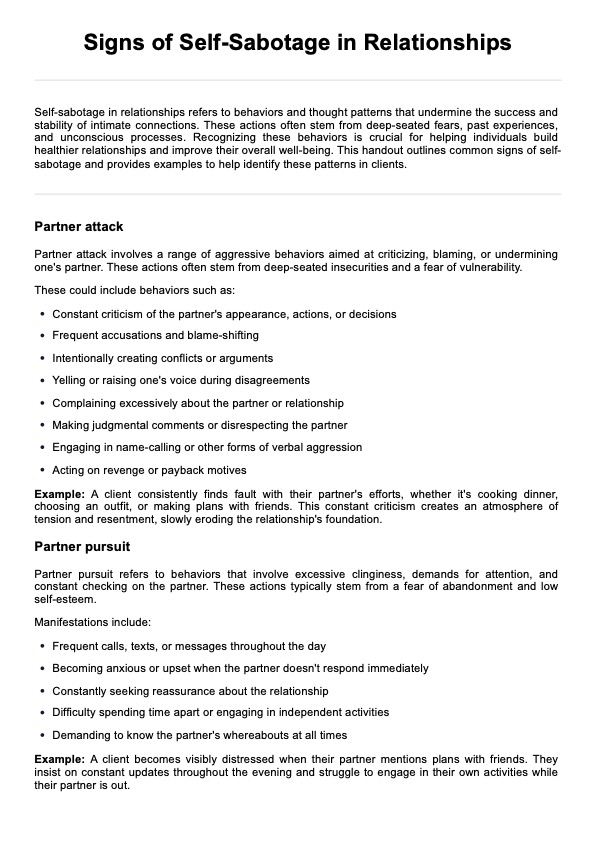
Common self-sabotaging behaviors in a relationship
Self-sabotaging relationships can take various forms, often rooted in deep-seated fears and insecurities. Recognizing these patterns, especially in current romantic relationships and in past relationships, is crucial for helping individuals build healthier connections. Carepatron's Signs of Self-Sabotage in Relationships PDF handout outlines the following signs and behaviors:
Partner attack
This involves criticism, blame, and creating conflicts. A self-sabotaging partner might constantly find fault with their partner, initiate arguments over minor issues, or use harsh language during disagreements. For example, a person might regularly criticize their partner's appearance or decisions, creating an atmosphere of tension and resentment.
Partner pursuit
Excessive clinginess and demanding attention characterize this behavior. It can manifest as constant calling or texting, becoming anxious when the partner is unavailable, or struggling to spend time apart. An individual might feel distressed when their partner makes plans without them, leading to repeated check-ins and requests for reassurance.
Partner withdrawal
This involves emotional distancing and avoiding conflict. People might stonewall during arguments, refuse to discuss relationship issues, or physically distance themselves by spending more time away from home. For instance, someone might completely shut down during disagreements, refusing to engage in problem-solving discussions.
Defensiveness
This behavior includes deflecting blame, making excuses, and refusing to take responsibility for one's actions. When confronted with an issue, a defensive person might immediately counter with accusations or portray themselves as the victim, hindering effective communication and problem-solving.
Trust issues and jealousy
Constant suspicion, checking a partner's phone or social media, and making unfounded accusations of infidelity are common manifestations. An individual might become irrationally upset about their partner's interactions with others, demanding explanations for innocent situations.