




What is separation anxiety disorder?
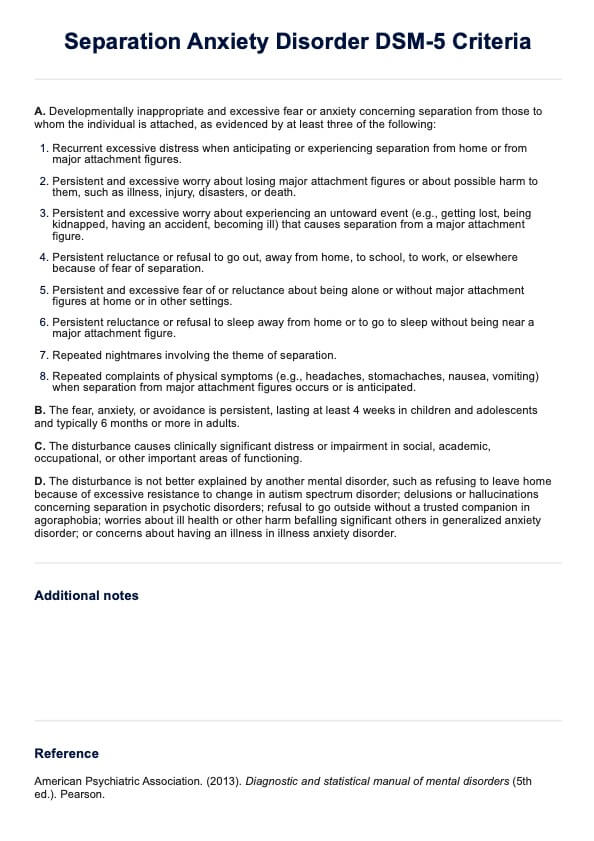
Separation anxiety disorder is characterized by excessive fear or anxiety concerning separation from major attachment figures. According to the Diagnostic and Statistical Manual of Mental Disorders (DSM-5), it falls under the category of anxiety disorders. Individuals with this disorder often experience persistent and excessive worry that something bad will happen to their loved ones or themselves when they are apart. This anxiety leads to persistent reluctance or refusal to be separated from major attachment figures, such as adult separation anxiety disorder.
Symptoms of separation anxiety disorder include clinically significant distress or persistent reluctance or refusal when separation occurs or is anticipated. These symptoms can manifest as physical complaints like headaches or stomachaches. Persistent and excessive worry are clinically significant, causing distress that disrupts daily life and social activities.
Separation anxiety disorder can occur in children as well as adults. In adults, it may manifest differently, often alongside other anxiety disorders such as panic disorder or generalized anxiety disorder. Treatment typically involves psychotherapy, including cognitive-behavioral therapy (CBT), aimed at reducing anxiety and improving coping strategies.









