





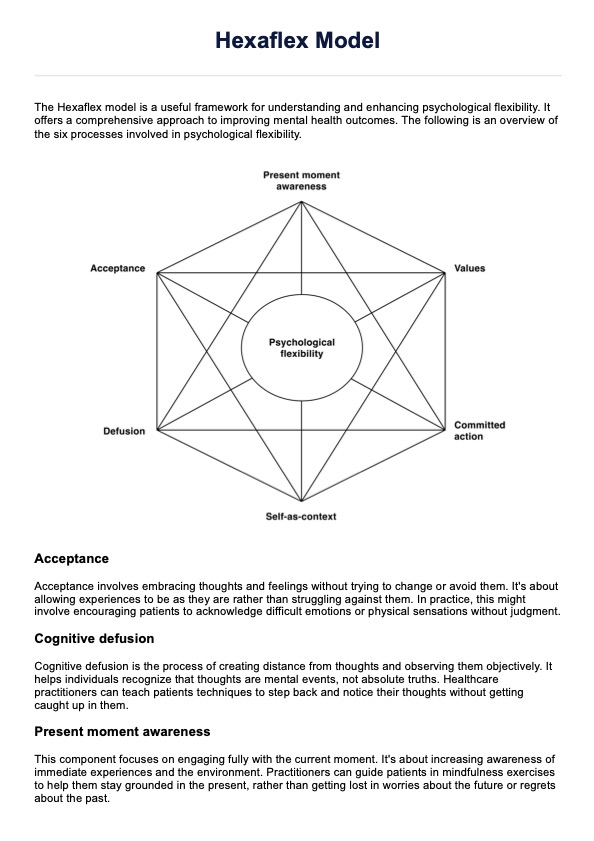




What is the Hexaflex Model?
The Hexaflex Model is a key framework within Acceptance and Commitment Therapy (ACT), a psychological intervention designed to enhance psychological flexibility. This serves as a visual guide to understanding these processes, which include present-moment awareness, acceptance, defusion, self-as-context, values, and committed action. These processes aim to help individuals better cope with challenges, such as chronic pain or emotional distress, by fostering a healthier relationship with their thoughts and feelings.
A key feature of the Hexaflex Model is the emphasis on mindfulness exercises and embracing the present moment. By practicing mindfulness, individuals learn to become aware of their thoughts without getting caught up in them, enhancing psychological flexibility. This flexibility allows them to engage in committed action aligned with their values rather than being driven by avoidance or fear.
ACT therapists use the Hexaflex Model as a foundational tool to guide clients toward self-compassion, resilience, and acceptance, which can mitigate human suffering. The model promotes self-compassion by encouraging individuals to view themselves with kindness during tough times, improving mental well-being.









