How to apply the 7 habits
The 7 habits help individuals enhance their effectiveness, build stronger relationships, and achieve their goals. However, sucess isn't built in a single day, and forming the habits that lead a person to success can take just as long. Here are tips you can give your client to apply each of the 7 habits in their daily life:
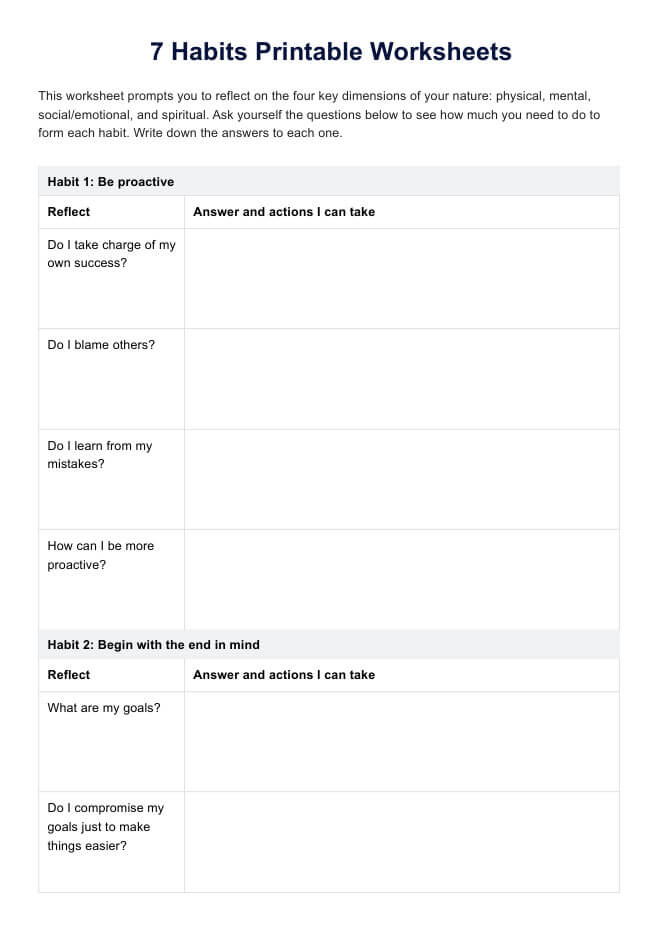
Habit 1: Be proactive
Being proactive means taking the initiative. Avoid being passive, and make the first move for your own improvement. However, this does not necessarily mean jumping in without looking; the first step can be analyzing your options and looking at ways to improve yourself. Accountability is at the core of the proactive mindset—you take responsibility for your own success as well as your own misgivings. As such, this also means that you take the blame for your missteps instead of pointing the finger. A mindset like this not only fosters the resilience but also the willingness to learn and the desire for more experience.
Habit 2: Begin with the end in mind
Set clear career goals and create a roadmap, ensuring every action aligns with your long-term vision. For instance, if you aim to become a manager, identify the key skills you need to develop, such as leadership and project management. Then, seek stretch assignments and training opportunities to help you gain those competencies.
Habit 3: Put first things first
Prioritize tasks based on their importance and urgency. Use tools like to-do lists and calendars to manage your time effectively. For example, create a daily to-do list that categorizes tasks as A (high priority), B (medium priority), or C (low priority). Focus on completing your A tasks first, even if they are challenging. Schedule time for important but not urgent tasks like strategic planning or skill development.
Habit 4: Think win-win
Approach conflicts and negotiations collaboratively, seeking solutions that benefit all parties. For instance, if you disagree with a colleague, take time to understand their perspective and find common ground. Propose alternatives that address your needs, such as dividing responsibilities or finding creative ways to meet deadlines.
Habit 5: Seek first to understand, then to be understood
Practice active listening by paraphrasing what others say and asking clarifying questions. For example, when receiving feedback from your manager, repeat the key points to ensure you understand correctly. Ask questions to gain more context and avoid making assumptions. Before you make your own point, first listen and understand what other people are trying to say. By practicing active listening and seeking to understand different perspectives, you can build stronger relationships and foster better communication.
Habit 6: Synergize
Collaborate with others to achieve better results than you could alone. If you are working on a project with a cross-functional team, leverage each person's unique strengths and perspectives. Encourage open communication and idea sharing to generate innovative solutions.
Habit 7: Sharpen the saw
Invest in your growth and well-being, whether in the physical dimension, the intellectual one, or in the emotional sphere. You are trying to maintain high performance over the long term. For example, set aside time each week for learning a new skill or mastering one you already have. Block off an hour or two to read books about philosophy or stay up-to-date with current events. You can go to the gym to improve your physical and mental fitness, too. And while you're at it, say hello to some old friends or make new ones.
By applying these habits consistently, you can develop greater self-awareness, build stronger relationships, and achieve your personal and professional goals. Regularly reflect on your progress and adjust your approach as needed.