What do the answers mean for patient education?
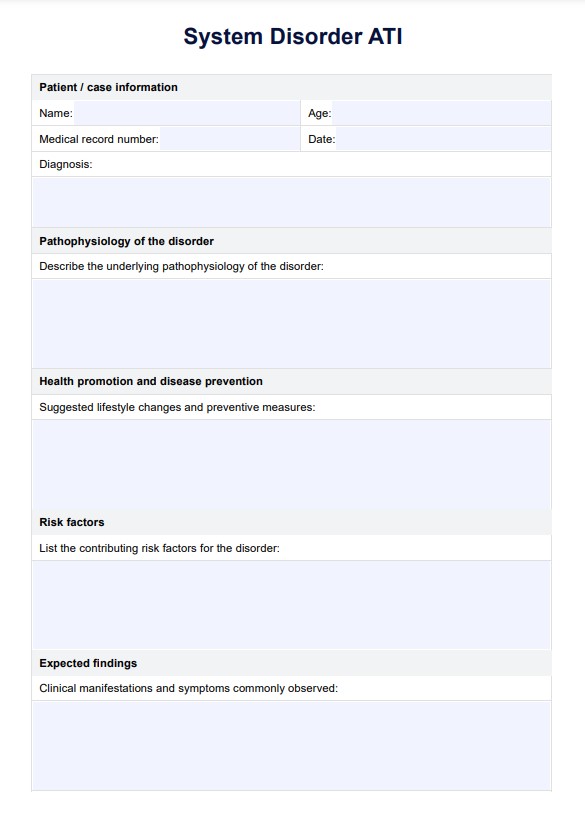
Completing our free System Disorder ATI Template yields a detailed and comprehensive overview of a specific system disorder. This overview includes a deep dive into the pathophysiology, symptoms, diagnostic methods, and treatment options for body system disorders. For healthcare professionals, these answers are crucial in several ways:
Enhanced patient care
A thoroughly completed template indicates a robust understanding of the disorder, vital for developing effective patient care strategies. It ensures that healthcare providers can make informed treatment plans and patient education decisions.
Educational value
The results reflect students' grasp of the disorder, highlighting areas for further study. It is a self-assessment tool that helps them identify their strengths and weaknesses in understanding different medical conditions. Educating patients about environmental triggers is vital in managing chronic conditions.
By using this ATI system disorder template, healthcare providers can identify and communicate potential environmental risks that could exacerbate the patient’s condition. This proactive approach helps patients avoid triggers and maintain better health outcomes.
Research and development
The template's results can provide insights into the disorder's prevalence and characteristics in research settings. This information can be instrumental in developing new treatment methods or healthcare policies.
Accurate medication and treatment adherence
The ATI system disorder template outlines specific medications and treatments for patient education. Educating patients on the importance of following prescribed nursing interventions and conducting regular blood glucose checks ensures adherence to treatment plans. This not only improves patient outcomes but also reduces the likelihood of complications.
Personalized patient care
By completing the ATI system disorder template, healthcare providers can offer personalized education that addresses each patient's unique needs. This tailored approach considers the patient’s specific system disorder, genetic predispositions, and lifestyle factors, leading to more effective and targeted patient education. Personalized care enhances patient engagement, improving compliance and overall health management.