
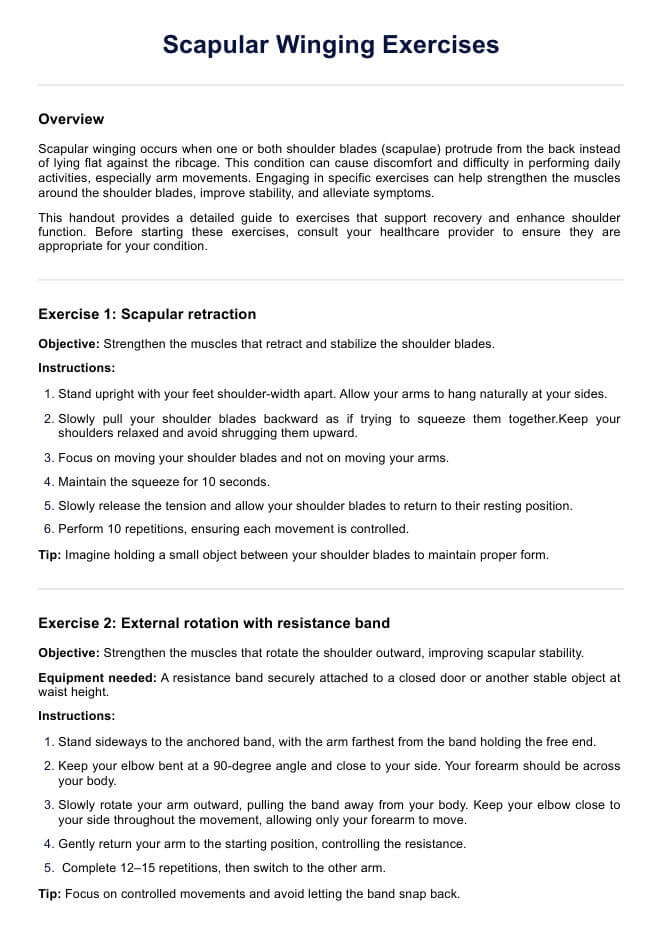




What is a winged scapula?
A winged scapula, also known as scapular winging, is a condition where the shoulder blade (scapula) protrudes away from the back of the body, creating a noticeable bulge or "wing-like" appearance on the affected side. This condition can occur in one or both shoulder blades and may affect people of all ages and genders. It can range from mild to severe, depending on the underlying cause and how long it has been present.
A winged scapula can significantly impact the function of the shoulder girdle, leading to limitations in shoulder flexion and other movements. The trapezius muscle, particularly the upper trapezius, plays a vital role in stabilizing the scapula during shoulder movements. When these muscles are compromised, it can result in altered biomechanics and reduced range of motion.
Symptoms
Some common symptoms of a winged scapula include:
- A visible protrusion or “wing-like” appearance on the affected shoulder blade
- Pain or discomfort in the shoulder, neck, and upper back region
- Limited range of motion in the affected arm and shoulder
- Difficulty performing overhead activities such as reaching or lifting objects
- Muscle weakness in the affected arm and shoulder
Individuals with a winged scapula may also experience tingling or numbness in the affected arm and hand, as well as muscle atrophy (shrinkage) in severe cases.
Causes
The condition often arises due to weakness or paralysis of the serratus anterior muscle, a crucial muscle responsible for holding the scapula against the thoracic wall. The serratus anterior muscle is innervated by the long thoracic nerve, and injury or dysfunction of this nerve can lead to scapular winging. Additionally, the dorsal scapular nerve, which innervates the rhomboid muscles, and the spinal accessory nerve, which innervates the trapezius muscle, can also be involved in scapular winging.









