
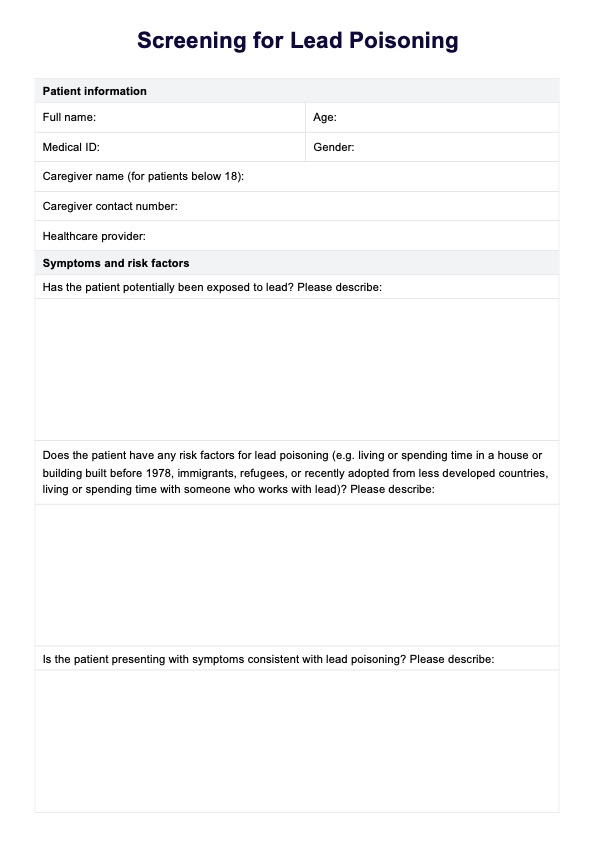




What is a Screening for Lead Poisoning test?
Screening for Lead Poisoning is the process of assessing whether an individual has been exposed to lead, which can be highly dangerous and cause serious health complications. Lead poisoning typically occurs when lead dust is ingested, inhaled, or absorbed through the skin, usually when old lead paint deteriorates. While lead poisoning can affect all people, children are largely vulnerable and are typically screened for it.
When lead builds up in the body over a long period, it can have major impacts on brain and central nervous system development. In extreme cases, it can cause permanent and severe disability or death. Physical symptoms in children include anemia, weight loss, low appetite, confusion, fatigue, irritability, slowed growth, and learning delays.
The screening procedure involves blood lead tests to determine whether an adult or a child's blood lead level (BLL) is higher than normal. It is typically carried out when a child presents with lead poisoning symptoms or is deemed at high risk of lead exposure.
Initial blood lead testing involves a simple finger stick or capillary test, in which a small blood sample is taken from a child's arm or finger. Blood lead test screening can be performed and analyzed in a general practitioner's or pediatric doctor's office. If this test indicates the child has elevated blood lead levels, a venous draw blood lead test to confirm lead poisoning is necessary.









