









What is the lumbar spine?
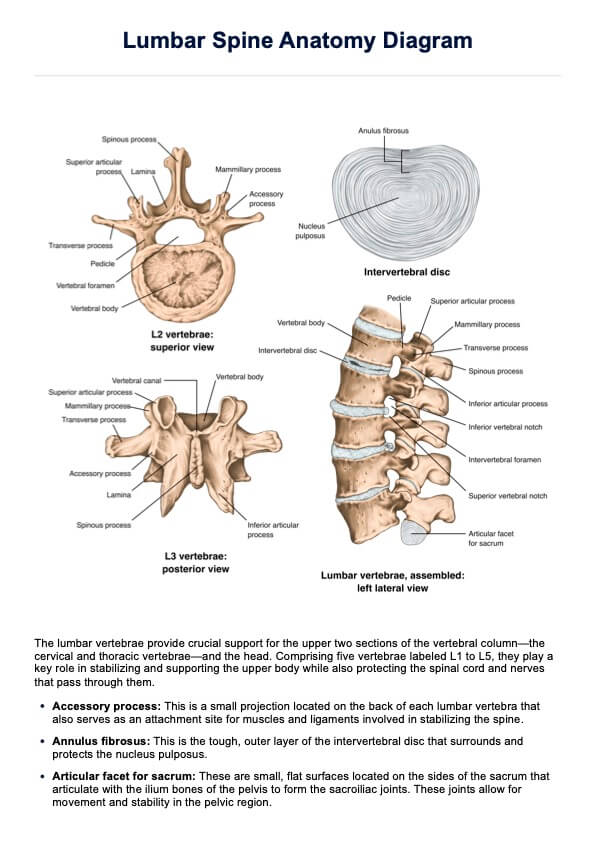
The lumbar spine consists of five lumbar vertebrae located in the lower back, forming the lumbar region. Each lumbar vertebra is large and robust, designed to bear the body's weight. The vertebral body is the main load-bearing structure, while the transverse processes and superior and inferior articular processes provide stability and attachment points for muscles and ligaments. The spinal cord runs through the spinal canal, protected by the posterior longitudinal ligament. Spinal nerves, specifically lumbar spinal nerves, branch out to various parts of the body. Conditions like lumbar spinal stenosis, where the spinal canal narrows, can compress these nerves, leading to pain and discomfort.
What is its function?
The lumbar spine plays a crucial role in supporting most of the body's weight, serving as the center of balance. Its five lumbar vertebrae and the attached muscles and ligaments enable a wide range of movements, including walking, running, sitting, lifting, and bending in all directions.
The lumbar spine's lordotic curve, a slight inward curve, helps maintain proper posture and balance. This region's robust structure and flexibility are essential for daily activities, providing both stability and mobility to the lower back and contributing to overall body function and movement.
What can impair or damage the lumbar spine?
The lumbar spine can be impaired or damaged by various factors, including traumatic injuries, such as falls or car accidents, which can fracture or dislocate the vertebrae.
Degenerative conditions like osteoarthritis and intervertebral disc degeneration can cause pain and limit mobility. Lumbar spinal stenosis, the narrowing of the spinal canal, can compress spinal nerves, leading to discomfort and neurological symptoms.
Poor posture, obesity, and repetitive strain from heavy lifting or improper body mechanics can also stress the lumbar region, contributing to chronic pain and dysfunction. Additionally, conditions like herniated discs can impinge on nerves, causing significant pain and mobility issues.
What can happen if the lumbar spine is damaged?
Damage to the lumbar spine can lead to severe consequences, including limited or complete loss of sensation below the injury site. Individuals may experience weakness, numbness, or loss of function in the hips, groin, and legs. In severe cases, this can necessitate the use of a manual wheelchair, either part-time or full-time. Additionally, damage to the lumbar spine can result in loss of control over bladder and bowel functions, significantly impacting quality of life.









