


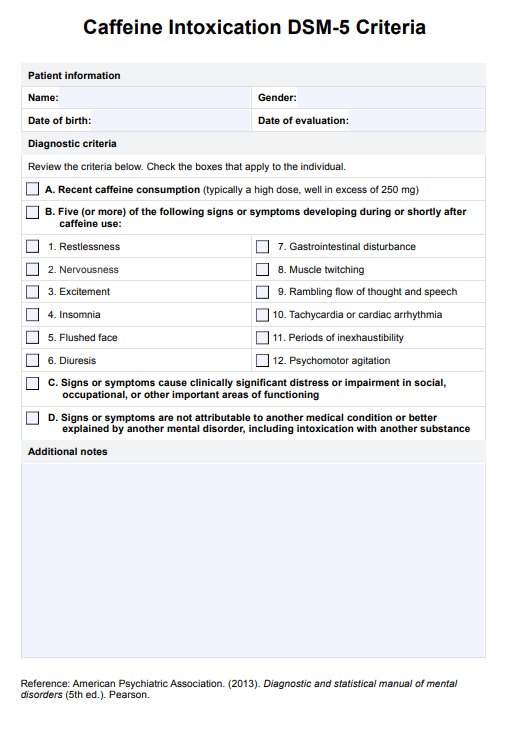




What is caffeine intoxication?
Caffeine intoxication occurs when excessive caffeine intake leads to symptoms like restlessness, nervousness, insomnia, or gastrointestinal distress. Recognized in the Diagnostic and Statistical Manual of Mental Disorders 5th edition (DSM-5), this caffeine-related disorder is classified under substance-related and addictive disorders. Health professionals diagnose it based on the amount of caffeine consumed and symptoms causing clinically significant distress or impairment.
It's often associated with energy drinks, dietary supplements, or excessive coffee consumption. Severe cases may require medical attention, mainly if symptoms like muscle twitching or rapid heartbeat occur. Understanding this condition helps practitioners provide effective care and guidance to patients.
The prevalence of caffeine intoxication in the general population is unclear. In the United States, around 7% of individuals may experience five or more symptoms with functional impairment consistent with the diagnosis (American Psychiatric Association, 2013). Caffeine intoxication is more common in infrequent users or those who have recently increased their intake significantly. Risk factors include the use of energy drinks, dietary supplements, weight loss aids, or oral contraceptives, which slow caffeine elimination and elevate the risk. Genetic predispositions may also contribute to susceptibility.









