






What are preoperative assessments?
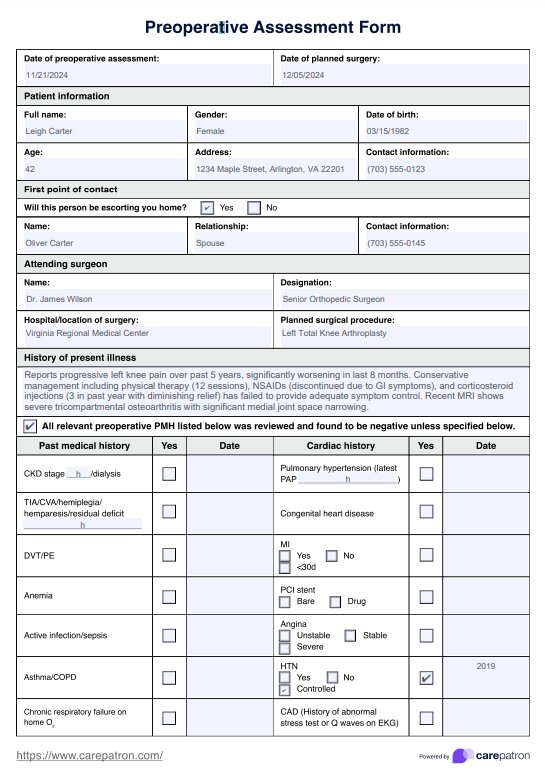
Preoperative assessment is a systematic medical evaluation conducted before a surgical procedure to ensure patient safety and optimize surgical outcomes. This comprehensive evaluation helps identify potential risk factors that could affect the surgery and recovery process. Several guidelines are issued on standards of this process, such as the 2014 Guideline on Perioperative Cardiovascular Evaluation by the American College of Cardiology (Fleisher et al., 2014).
Surgical complications occur frequently. Thus, a preoperative evaluation is conducted for proper preoperative risk assessment. This commonly includes a detailed history review, physical examination, and necessary laboratory tests tailored to the patient's condition and planned procedure. It establishes the patient's baseline health status, identifies any underlying medical conditions or possible perioperative cardiac risk, and allows for appropriate perioperative care planning. During this evaluation, healthcare providers carefully review the possible history of respiratory and cardiac disease, medication history, and previous surgical experiences.
The timing of this assessment is equally important. While some routine surgeries may only require evaluation a few days before the procedure, complex cases or surgical patients with multiple medical conditions might need assessment several weeks in advance to allow time for optimization.
Who commonly has to undergo such an assessment?
Preoperative assessment is typically required for all patients scheduled for surgical procedures. One of its main goals is to prevent perioperative cardiac complications, along with potential postoperative pulmonary complications.
Patients undergoing major surgery, including abdominal and thoracic surgery or vascular procedures, then require comprehensive assessment due to the higher risk of perioperative complications.
Similarly, patients with pre-existing medical conditions such as coronary artery disease, cardiovascular disease, myocardial infarction, chronic respiratory disease, chronic obstructive pulmonary disease, or diabetes need thorough evaluation regardless of the planned procedure's complexity.
Even seemingly healthy patients undergoing minor procedures may require basic preoperative assessment. While unable to undergo extensive preoperative assessment, emergency surgery patients still require rapid evaluation of their most critical risk factors to ensure safer surgical outcomes.









