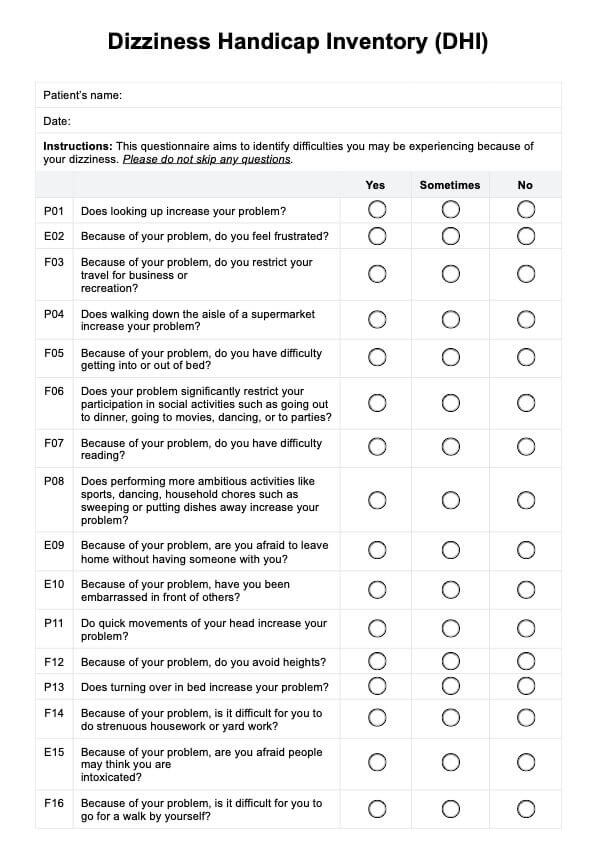
What is the Dizziness Handicap Inventory (DHI)?
The Dizziness Handicap Inventory (DHI) is a 25-item clinical instrument designed to evaluate the self-perceived handicap caused by vestibular disorders. It is a valuable tool in the assessment and management of patients with various vestibular diagnoses, such as benign paroxysmal positional vertigo and peripheral vestibular impairment. The DHI helps quantify the impact of peripheral vestibular dysfunction and conditions like persistent postural perceptual dizziness on a patient's daily life.
The inventory considers physical, emotional, and functional aspects of dizziness, providing insights into the severity of the handicap. Scoring is based on allocating 4 points for "yes," 2 points for "sometimes," and 0 points for "no."
The DHI total score ranges from 0 to 100, with higher scores indicating a greater perceived disability. Patients who score above 10 points should be referred to balance specialists for further evaluation.
Dizziness Handicap Inventory scores can indicate whether a patient experiences a mild handicap or a more significant vestibular handicap. These scores often correlate with other objective vestibular tests, such as the vestibular rehabilitation benefit questionnaire, and can be statistically significant when assessing the presence of psychiatric disorders alongside vestibular issues.
For patients undergoing vestibular rehabilitation, the DHI offers a way to track changes in self-perceived handicap over time. In cases of structural disorders, vestibular neuritis, or vestibular migraine, the DHI scores are pivotal in measuring the effectiveness of therapeutic interventions and guiding the course of treatment.