




What is burnout?
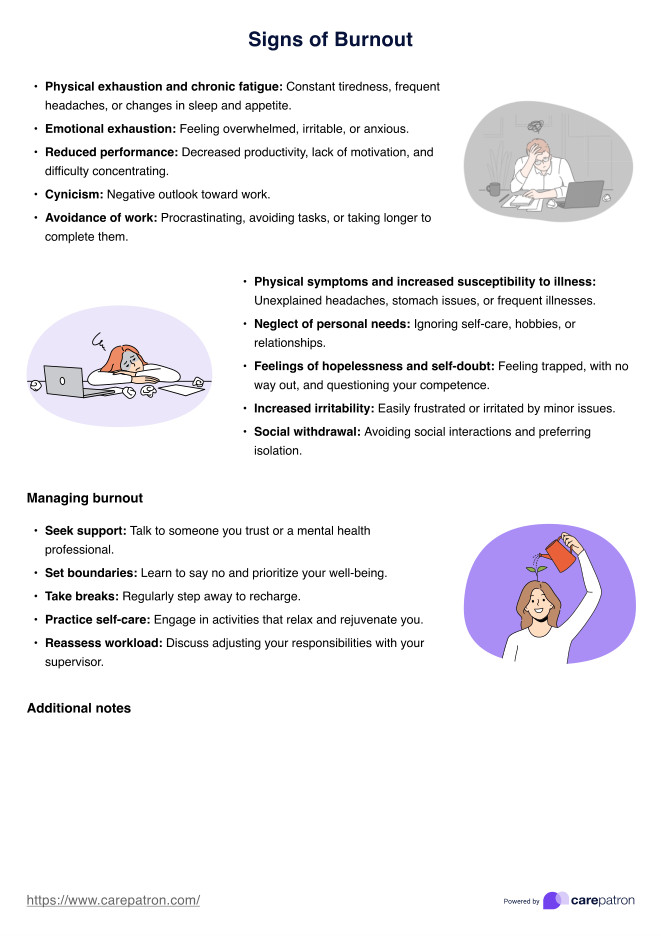
Job burnout is a state of physical, emotional, and mental exhaustion caused by prolonged and excessive stress. In the short term, burnout can manifest as fatigue, irritability, and decreased productivity. It affects a person's ability to perform tasks, interact with others, and enjoy life. Over time, if left unaddressed, burnout can take a severe toll on a person's physical and emotional health. It can lead to chronic stress, anxiety, depression, and even physical health issues like heart disease or a weakened immune system.
Unlike work-related stress, which is often temporary and can be managed with coping strategies, burnout is a more profound and enduring state of exhaustion that doesn’t simply go away with rest. Stress is a response to demands and pressures that a person feels they can still manage, whereas burnout occurs when those demands become overwhelming, leading to a sense of helplessness and disillusionment.
Burnout can affect anyone, but it's particularly common in professionals who work in high-stress environments or who have a strong sense of responsibility. People in caregiving roles, such as healthcare workers, teachers, and social workers, are especially vulnerable. This is especially concerning as there is a moderate depression-burnout correlation, indicating they are related despite being separate phenomena.









