









What are DARP notes?
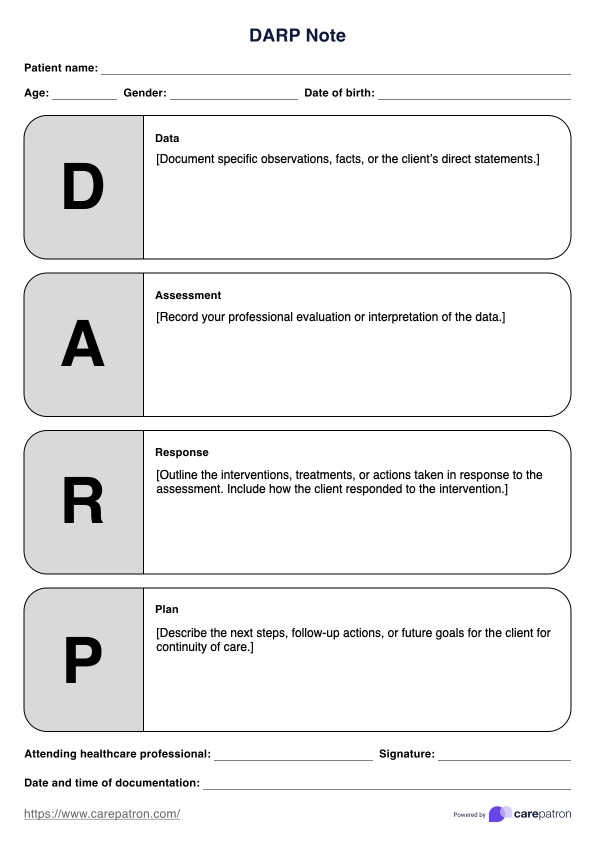
Writing progress notes of any kind is vital in healthcare documentation. These notes keep a clear record of client interactions, track treatment progress, and make it easier to hand off care between professionals. DARP notes, which stand for Data, Assessment, Response, and Plan, are a structured way to document what happens during client interactions in a straightforward format.
How does the DARP note format go?
DARP notes are a type of progress note that break down interactions into four sections:
- Data: Observations, facts, and anything about the client's subjective experience
- Assessment: Your professional interpretation or clinical impressions about the client's behavior based on the data you’ve gathered.
- Response: The actions taken or interventions provided, along with the client’s reactions.
- Plan: Follow-up actions, steps for the next session, or treatment goals to support the client’s ongoing care.
This organized structure helps ensure that the information is clear and complete, which makes it easier for any healthcare professional reading the notes to understand the client’s situation and plan.
How is it different from SOAP notes?
DARP notes are similar to SOAP notes in that both provide a clear, structured way to document interactions, but they’re arranged a bit differently. SOAP stands for Subjective, Objective, Assessment, and Plan. In SOAP notes, the focus is on documenting a patient’s subjective and objective information first, followed by an assessment and then a plan.
DARP notes, on the other hand, have a unique Response section, which lets you detail the specific interventions or treatments given and the client’s reaction to them. This makes DARP notes particularly useful in situations where you’re monitoring and adjusting care based on client responses, such as in mental health settings. Each format has its strengths, and knowing both gives you the flexibility to choose the best tool for their documentation needs.









