
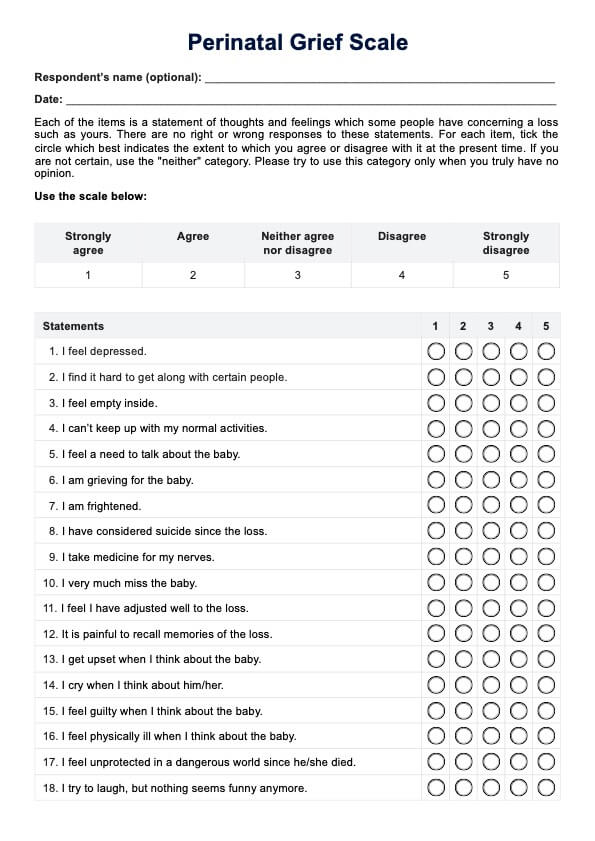




What is the Perinatal Grief Scale?
The Perinatal Grief Scale (PGS) is a psychological assessment tool developed by Toedter, Lasker, and Alhadeff in 1988. It is primarily used to measure emotional and psychological responses following perinatal loss, including miscarriage, stillbirth, and neonatal death. The scale helps healthcare professionals, and researchers assess the depth and nature of grief experienced by bereaved parents after such a loss. While the scale is predominantly used for research purposes, it can also serve as a diagnostic tool to help clinicians identify the risk of conditions like major depressive disorder or anxiety that often accompany the loss of a child during the perinatal period.
Perinatal grief refers to the intense emotional pain and sorrow felt by parents following pregnancy loss or the death of the baby within the first few weeks after birth. This grief can manifest in various ways, such as sadness, anger, guilt, or physical symptoms like exhaustion and headaches, severely impacting both mental and physical health. Perinatal loss includes miscarriage, stillbirth, and neonatal death, each of which may trigger a different intensity and pattern of grief depending on personal circumstances and support systems. Further research on perinatal grief is essential to enhance mental health interventions, inform healthcare policies, and improve the support offered to individuals coping with such losses.
The PGS offers healthcare professionals a structured way to assess the emotions surrounding perinatal grief. By identifying the emotional and psychological aspects of grief, the PGS provides insights that can guide personalized care plans, whether for therapeutic interventions, support groups, or follow-up treatments for physical health concerns linked to grief. It also enables researchers to measure the prevalence and severity of grief in various populations, contributing to better resources and policy changes.
It's also important to differentiate the PGS from the Perinatal Bereavement Grief Scale (PBGS), developed by Ritsher and Neugebauer. While the PGS measures the overall emotional impact of perinatal loss, the PBGS was specifically designed for distinguishing grief from major depressive disorder following miscarriage. The PBGS focuses on clarifying the overlap between grief and depression, whereas the PGS takes a broader approach, assessing grief across a range of perinatal losses, including neonatal death.









