




What are Erikson's stages of psychosocial development?
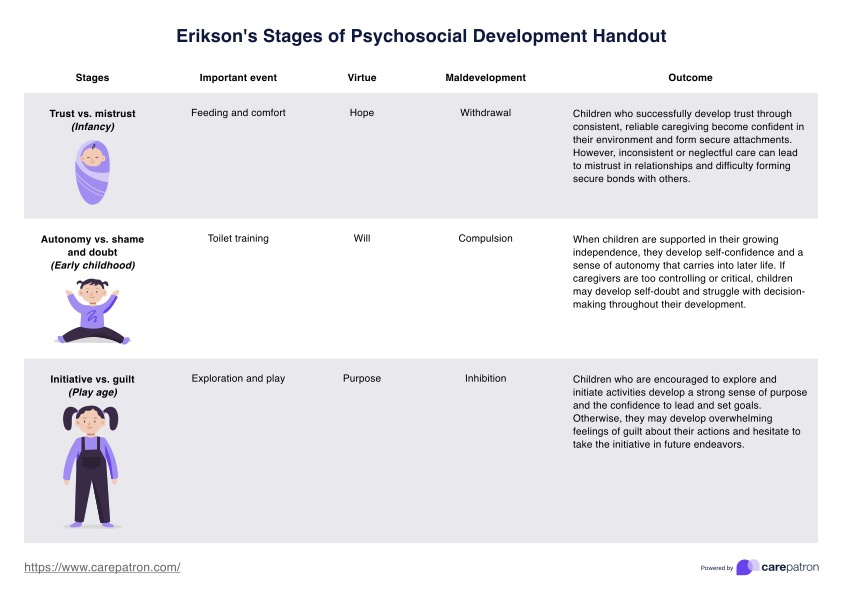
Like many human development theories, Erik Erikson outlines psychosocial growth in different stages. Erikson's developmental stage model provides a comprehensive framework for understanding human growth across the lifespan, outlining eight life stages that individuals navigate from infancy through young adulthood and into old age (Orenstein & Lewis, 2022). Each stage presents a unique developmental challenge or crisis that shapes personality and social development. The eight stages include the following (Palm, 2024):
- Trust vs. mistrust (Infancy): Development of basic trust through consistent caregiving
- Autonomy vs. shame/doubt (Early childhood): Emergence of independence and self-assertion
- Initiative vs. guilt (Play age): Exploration of boundaries and purpose
- Industry vs. inferiority (School age): Development of competence and self-worth
- Identity vs. role confusion (Adolescence): Formation of personal identity and future direction
- Intimacy vs. isolation (Early adulthood): Establishment of meaningful and intimate relationships
- Generativity vs. stagnation (Middle adulthood): Contributing to society and nurturing future generations
- Ego integrity vs. despair (Old age): Life reflection and acceptance
Understanding these stages is crucial for mental health professionals for several key reasons. First, they provide a structured approach to assessing developmental progress and identifying potential conflict areas. This knowledge helps recognize whether current challenges stem from unresolved issues in previous developmental stages.
Additionally, Erikson's theory enables practitioners to contextualize client experiences within their developmental stage, leading to more targeted and effective interventions. For example, understanding that identity formation is central to adolescence helps inform treatment approaches for teenagers struggling with self-concept issues. This understanding allows practitioners to support clients in addressing both current challenges and underlying developmental needs.









