




What is the Mental Health Continuum Model?
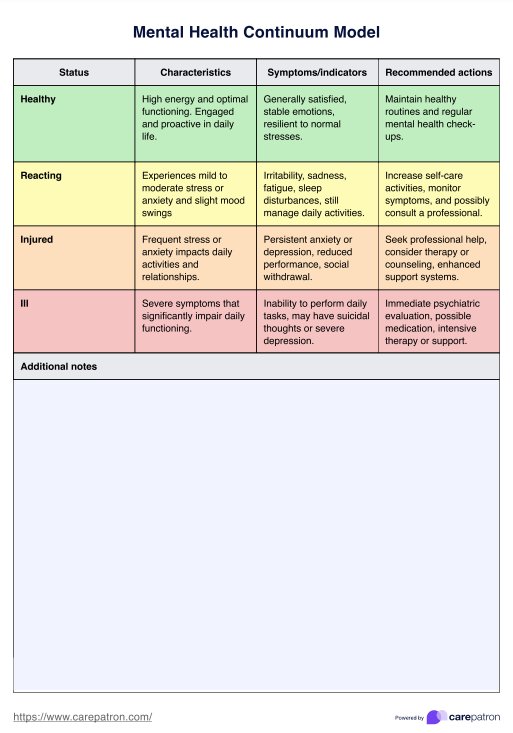
The Mental Health Continuum Model is a versatile framework that categorizes the dynamic nature of mental health into several stages, ranging from positive mental health to severe mental health conditions. It emphasizes that mental well-being encompasses more than the absence of mental or physical illness; it includes being emotionally well-balanced, capable of performing daily life functions, and effectively managing the normal stresses of life.
This model organizes mental health into four distinct phases:
- Healthy: Individuals at this end of the continuum exhibit significant positive mental health, feel generally satisfied with life, and are well-equipped to handle daily stresses and maintain strong social and emotional well-being.
- Reacting: This phase is characterized by less optimal functioning. Individuals in this phase may experience mild, temporary symptoms of stress or anxiety but are still able to manage daily activities and responsibilities.
- Injured: Moving further along the continuum, individuals begin to struggle more noticeably with mental health issues. They may exhibit significant changes in emotion and behavior, impacting their ability to cope with daily life functions, and social support may become necessary.
- Ill: At this extreme end of the continuum, individuals may experience severe symptoms that interfere with their lives and require intensive psychiatric treatment or an intensive outpatient program to manage their condition.









