
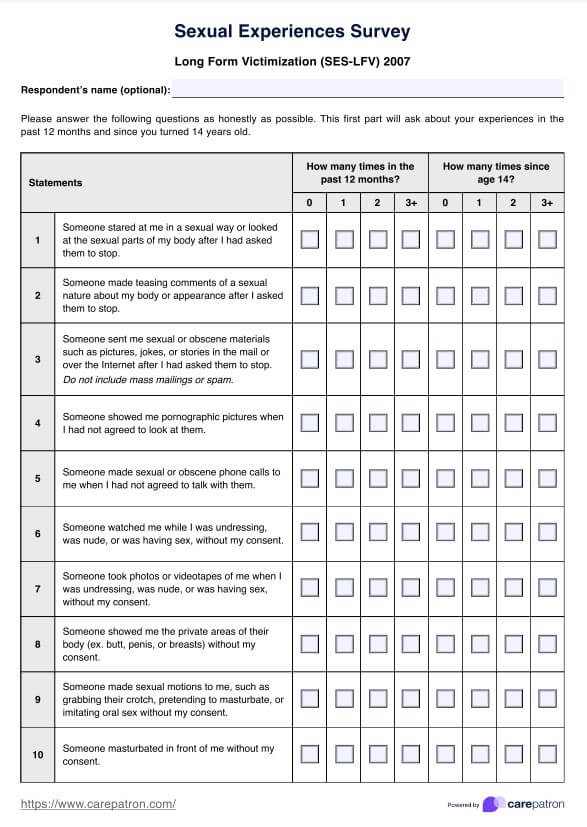




What is a Sexual Experiences Survey?
The Sexual Experiences Survey (SES) is a comprehensive research tool developed to measure various forms of sexual victimization and perpetration. Originally created by Dr. Mary P. Koss and Dr. Christine Oros in the 1980s, the SES has been instrumental in advancing our understanding of sexual aggression and its impacts. The survey underwent significant revisions in 2007 and again in 2024, ensuring it remains relevant and accurate in capturing the nuances of sexual violence across different populations, particularly among university women and college-going women.
The SES questionnaires include items and response options related to a wide range of behaviors, such as sexual coercion, sexual harassment, gender harassment, unwanted sexual attention, and unwanted sexual contact. These behaviors can manifest in various forms, including repeated requests for sexual activity, taking advantage of someone’s vulnerability, or using physical force. The survey also covers more severe instances, such as attempted rape, interpersonal violence, and coercive acts like forcing oral sex.
Researchers and organization administrators (especially universities and colleges) can use the SES to study sexual harassment and its broader impacts, particularly in educational settings where such issues are prevalent. The scoring guidelines use confirmatory factor analysis, letting researchers validate the constructs measured by the SES, ensuring that the survey reliably assesses the intended behaviors and experiences. This makes the SES particularly useful in distinguishing between different types of sexual misconduct, such as unwanted sexual attention and more severe forms like sexual assault and rape.
The data gathered from the SES is crucial for informing public policies, developing prevention programs, and providing support services, especially for university or college administrators. By capturing detailed information about the prevalence and nature of sexual violence, the SES helps in creating targeted interventions that address the specific needs of those affected. Moreover, it highlights the importance of addressing sexual violence in environments like universities, where young adults are particularly vulnerable to such experiences.
The SES not only helps in quantifying these behaviors but also plays a vital role in raising awareness about the different forms of sexual misconduct, encouraging a proactive approach to tackling these issues within communities and institutions.









