




What is a Rejection Sensitivity Test?
A Rejection Sensitivity Test is a valuable diagnostic tool used to identify heightened emotional responses to perceived or actual rejection. Rejection sensitivity, particularly in the form of rejection-sensitive dysphoria (RSD), is characterized by intense emotional reactions to criticism or rejection, whether real or anticipated. This condition is often associated with ADHD and other mental health conditions, manifesting as emotional dysregulation, negative self-talk, and extreme sadness.
Understanding the nuances of rejection sensitivity is essential, especially for mental health professionals. Patients experiencing RSD frequently report severe emotional pain, low self-esteem, and intense feelings of rejection that can impact their social interactions, romantic relationships, and overall well-being. These reactions may include intense bouts of negative emotions, making even commonplace interactions feel overwhelming. Such patients are often their own harshest critics, with symptoms potentially affecting their ability to maintain close friendships or handle perceived criticism from colleagues, partners, or peers.
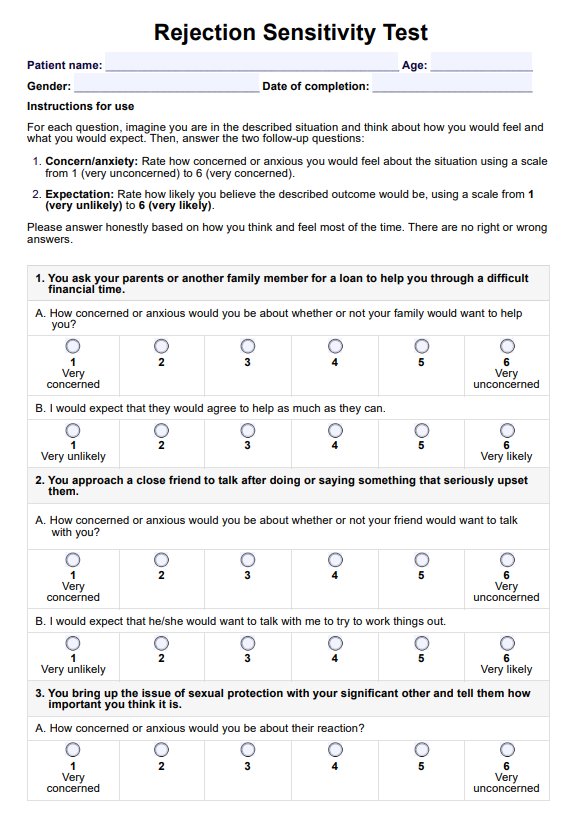
Administering a Rejection Sensitivity Test using our template can provide valuable insights into the patient’s emotional regulation challenges since it is based on the Berenson et al.'s Rejection Sensitivity Questionnaire, Adult version (A-RSQ), developed in 2009. While the test itself is not an end-all-be-all rejection-sensitive dysphoria test that leads to a formal diagnosis, it can help you gauge the severity of the issue and guide further evaluation. The formal process of having rejection-sensitive dysphoria diagnosed requires a comprehensive assessment, especially when RSD symptoms coexist with other conditions like mood disorders or ADHD.









