





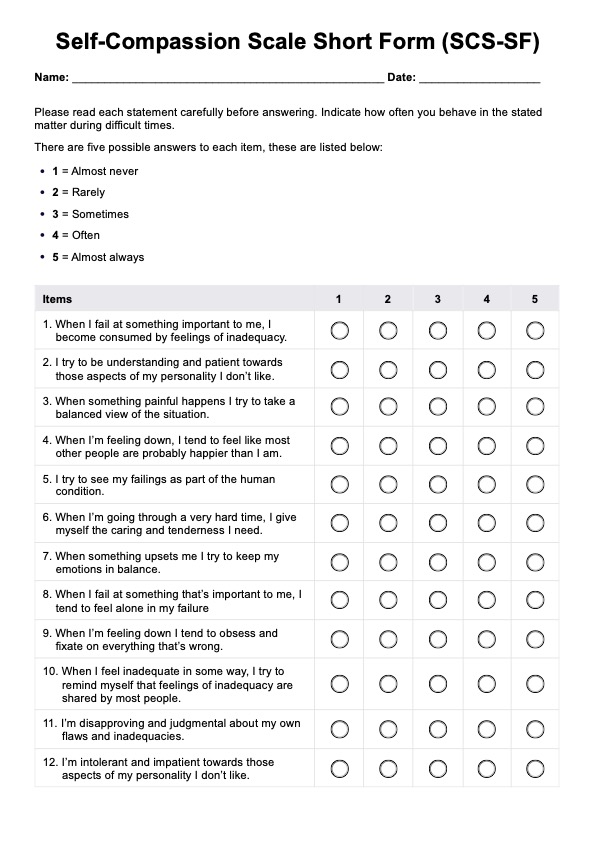



What is the Self-Compassion Scale Short Form (SCS -SF)?
Inevitably, life is full of ups and downs, and the human experience is often marked by uncomfortable or unpleasant emotions. Self-compassion offers a pathway to navigate these challenges by fostering self-kindness, mindfulness, and an acceptance that adversity is an inevitable part of life (Houston, 2019).
The Self-Compassion Scale Short Form (SCS-SF) is a psychological assessment that is valid and theoretically coherent to measure self-compassion (Maya et al., 2024). It is a shortened version of the original Self-Compassion Scale (SCS), providing a more concise yet effective means of measuring the key components of self-compassion.
The scale consists of 12 items, which are categorized into six subscales that reflect different aspects of self-compassion:
- Self-kindness
- Judgment
- Common humanity
- Isolation
- Mindfulness
- Over-identification
Research has shown that individuals with higher levels of self-compassion tend to experience better mental health outcomes, including lower levels of anxiety and depression, as well as increased happiness and emotional resilience (Raes et al., 2011). The SCS-SF provides a reliable, efficient measure of these dimensions, making it a valuable tool for both clinical and research settings. By assessing the various facets of self-compassion, the scale helps to better understand how people relate to themselves during challenging times and offers insight into potential areas for emotional growth.









