









Understanding femininity and feminine behaviors
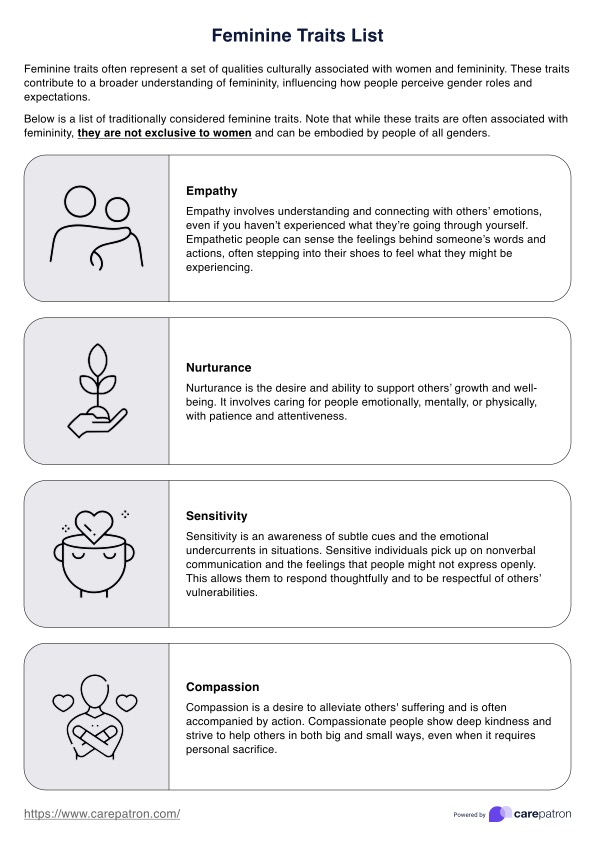
Femininity often brings to mind a range of qualities that many consider “feminine,” such as being nurturing, demure, gentle, and sweet (Windsor, 2015). These so-called feminine traits have become embedded in our culture as part of everyday life and are frequently used to describe someone’s gender identity or personality. The traits considered feminine have evolved into common female stereotypes—patterns that influence not only how people view others but also how they perceive themselves.
These gender stereotypes are not just abstract ideas; they’re reinforced through key areas of society like media, education, family life, and the workplace. Together, these forces help create specific ideas about femininity that shape how human beings, particularly women, may express themselves. Traits like caring for others, modesty, and a gentle demeanor are often stereotypically feminine. These roles impact different spheres of life and lead women to behavioral patterns and lifestyle habits associated with femininity (Esteban-Gonzalo et al., 2020).
The way society views femininity can also have real consequences. While these feminine traits are often celebrated, the pressure to conform to them can impact women’s self-concept and even career goals. Such stereotypes can limit human beings, as they often create narrow expectations for how a person's gender should “look” or be expressed.
Ultimately, femininity and the traits linked to it are part of a complex interaction between individual expression and societal expectations. Though often restrictive in their traditional forms, these so-called feminine traits are gradually being redefined to include a broader understanding of what it means to express one’s gender.









