
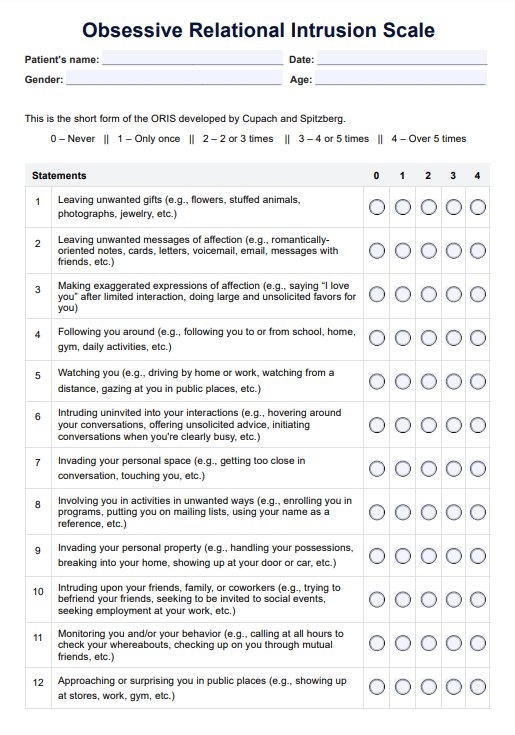




What is obsessive relational intrusion
Obsessive relational intrusion (ORI) refers to persistent, unwanted behaviors that violate personal boundaries and invade another person’s physical or symbolic privacy in an attempt to form or maintain an intimate relationship. These behaviors range from seemingly harmless acts, like sending unwanted gifts, to more intrusive actions, such as following someone or invading their personal space. Obsessive relational intrusions can escalate over time and become more threatening or harmful, including stalking behaviors.
ORI behavior often overlaps with stalking, where the individual persistently monitors or follows the target, creating fear and anxiety. This behavior can be part of a broader pattern of intimate partner violence, particularly when the perpetrator is a current or former partner. Stalking and ORI behaviors may be early warning signs of more severe forms of violence, including physical or emotional abuse, and should be taken seriously in the context of intimate relationships.
ORI can manifest in various ways, including hyper-intimacy (excessive displays of affection), invasion of privacy (such as monitoring or surveillance), and more severe threatening or coercive behaviors. Understanding and identifying ORI behaviors is critical for healthcare professionals and researchers to intervene early, provide appropriate support, and ensure the safety of the individuals affected by such behaviors.
Identifying relationally intrusive behaviors is essential not only for the well-being of victims but also for addressing the psychological patterns of those engaging in these behaviors. This understanding helps in developing interventions, coping responses, and strategies to reduce the risks and potential harm associated with obsessive relational intrusion.









