
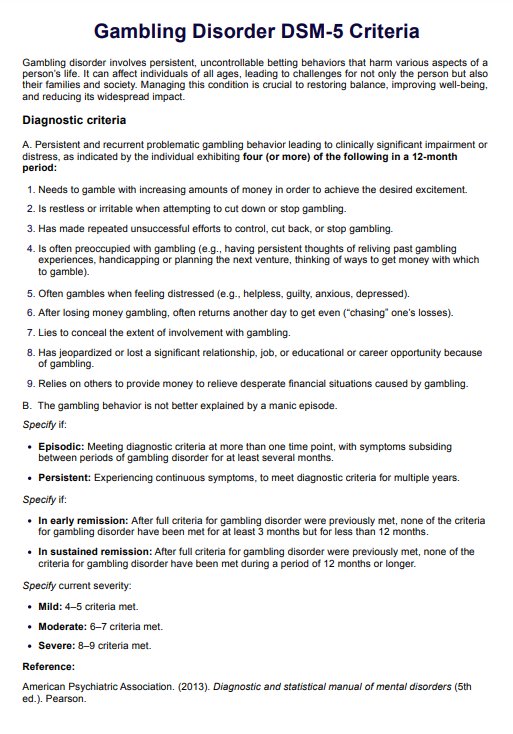




What is gambling disorder?
When clients seek help because gambling has escalated from occasional entertainment to excessive and uncontrollable behavior, it may be a sign of gambling disorder. Gambling disorder involves persistent betting habits that disrupt personal, financial, and social stability. This compulsive gambling can affect individuals of any age and often creates challenges for families and communities.
People with gambling disorder typically engage in recurrent gambling behaviors, often escalating in severity, and may experience intense cravings to gamble. Pathological gambling can lead to problematic gambling behaviors that interfere with daily life and responsibilities, resulting in the prioritization of gambling over work, social activities, or personal well-being.
Family members often notice the emotional and financial strain caused by the individual's gambling problems, including losing money gambling, which can lead to a cycle of loss and regret. Despite attempts to stop gambling, individuals with this disorder may struggle to control their impulses, continuing to gamble despite the negative impact on their lives. Addressing gambling disorder is essential to help clients regain control, improve their well-being, and minimize its broader impact.









