What is the Western Aphasia Battery (WAB)?
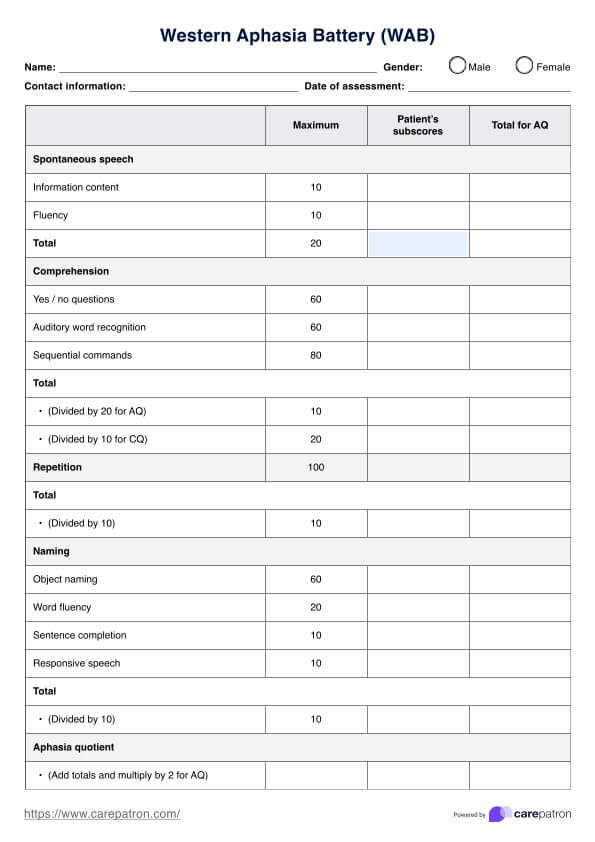
The Western Aphasia Battery (WAB) is a comprehensive diagnostic tool used to assess the language functions of individuals with suspected aphasia. Developed by Andrew Kertesz, the WAB evaluates various aspects of language, including spoken language, comprehension, repetition, naming skills, auditory word recognition, and reading and writing abilities. It is widely used in clinical settings alongside other tests, such as the Boston Diagnostic Aphasia Examination, to determine the severity and type of aphasia following a brain injury or stroke.
How is the Western Aphasia Battery (WAB) conducted?
The WAB is conducted through a series of standardized tests administered by a trained professional. These tests assess auditory fluency, auditory verbal comprehension, and fluency in auditory verbal comprehension, among other skills.
The battery consists of two main parts: the aphasia quotient (AQ) and the cortical quotient (CQ). The AQ assesses language production, comprehension, repetition, and praxis. The CQ evaluates cognitive abilities related to reading, writing, and calculation skills. The assessment is typically completed in one to two hours, depending on the individual’s condition and responsiveness.
How is the Western Aphasia Battery (WAB) scored?
Scoring the WAB involves calculating the aphasia and the cortical quotient, which showcase this assessment tool's reliability and validity characteristics. Each test within the battery has a specific scoring range, and the scores from individual tests are summed to provide a profile of the person's language abilities.
The aphasia quotient, which ranges from 0 to 100, is particularly crucial as it quantifies the severity of the aphasia—the lower the score, the more severe the impairment. These scores help categorize the type of aphasia, such as Broca’s, Wernicke’s, or global aphasia, and are essential for test interpretation relevant to each patient's condition.
Next steps after conducting/taking the Western Aphasia Battery (WAB)
After the WAB is conducted and the results are analyzed:
Diagnosis
After the WAB is conducted and the results are analyzed, the detailed profile provided by the assessment helps diagnose the type and severity of aphasia.
Treatment planning
Based on the diagnosis, a tailored treatment plan focuses on the areas that require the most intervention. This plan is personalized to address the unique challenges faced by the individual.
Therapy
Speech-language therapy begins, targeting specific deficits identified in the assessment. Therapy may include various techniques and exercises to improve communication skills, particularly focusing on word fluency.
Follow-up assessments
Regular follow-up assessments using the WAB or other relevant tools are conducted to monitor the individual's progress and adjust the treatment plan as necessary. This ensures the therapy remains effective and responsive to the person's evolving needs.