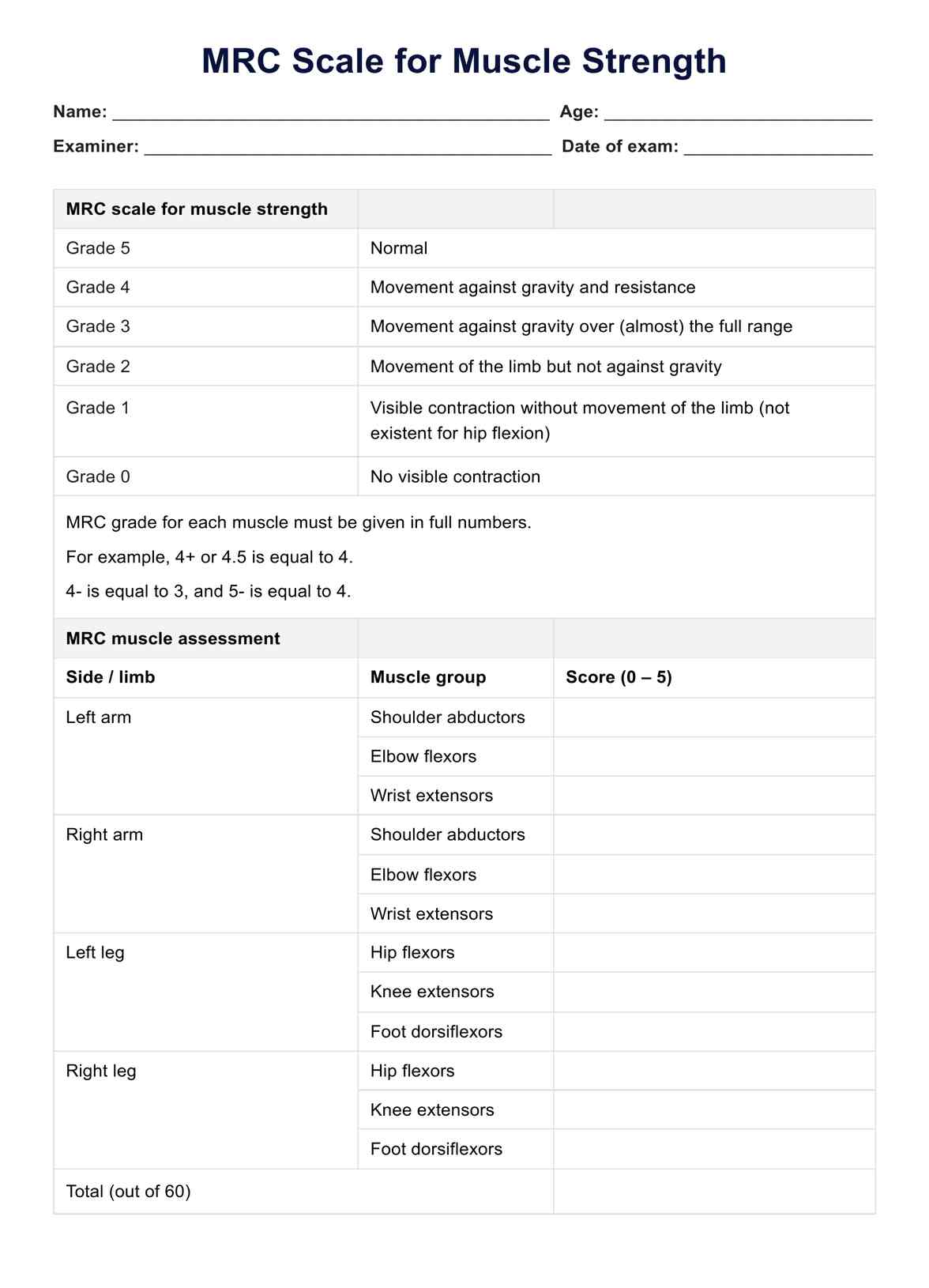
What is the MRC Scale for Muscle Strength?
The Medical Research Council (MRC) Scale for Muscle Strength is a widely recognized tool to asssess muscle strength and evaluate weakness in patients, particularly those with suspected neurologic diseases. The MRC scale systematically assesses muscles and the peripheral nervous system, including important spinal nerve roots and peripheral nerve injuries, ensuring a comprehensive evaluation.
The MRC scale assesses key muscle groups in both the upper and lower extremities. It helps differentiate true weakness from poor endurance, providing accurate insights into the patient's muscle power and overall strength.
This scale provides standardized muscle strength grading in the upper and lower extremities for a quantifiable measure essential for diagnosing suspected neurologic disease and monitoring neuromuscular conditions. It also demonstrates reasonable interrater reliability, making it a trusted method for evaluating muscle strength by different practitioners.
How do healthcare professionals use this scale?
Simply put, the scale is used to evaluate each muscle group while applying resistance. The scale uses a 0 to 5 grading system to evaluate the strength of specific muscle groups. Each muscle group is tested individually, and the strength is graded according to the following scale:
- Grade 0: No muscle activation.
- Grade 1: Trace muscle activation, such as a twitch, without achieving full range of motion.
- Grade 2: Muscle activation with gravity eliminated, achieving full range of motion.
- Grade 3: Muscle activation against gravity, full range of motion.
- Grade 4: Muscle activation against some resistance, full range of motion.
- Grade 5: Muscle activation against the examiner’s full resistance and range of motion.
How are the scores used?
After each muscle group is graded, the scores for all the limbs are summed up. The total score can range from 0 to 60 (15 per limb), with 60 indicating normal muscle strength across all limbs and 0 indicating no muscle activation (quadriplegia).
Next steps after using this scale
After performing MRC scale for muscle strength, take several steps to ensure the results are effectively used for patient care.
- Communicate results: Record MRC scores clearly in the patient's medical record, noting any asymmetries or weaknesses. Share results with the team using standardized formats for consistency.
- Develop a treatment plan: Design a rehabilitation program targeting weak muscles identified by the MRC scale. Incorporate exercises and therapies to improve overall function and quality of life. Collaborate with specialists for a comprehensive treatment plan, ensuring medical, physical, and psychological care coordination.
- Patient education and support: Explain the MRC scale results and their implications to the patient. Emphasize the importance of muscle strength for overall health and daily functioning, providing access to educational materials, support groups, and community programs if needed. Set realistic goals for improving strength and function. Encourage active participation and adherence to prescribed exercises and therapies.
- Monitoring and reassessment: Schedule regular follow-ups to monitor progress and reassess muscle strength. Adjust the treatment plan as needed. Develop a long-term management plan with periodic assessments and ongoing support.