




What is diaphragmatic breathing?
Diaphragmatic breathing, also known as abdominal breathing or belly breathing, is a technique that focuses on deep, slow, and even inhalations and exhalations using the diaphragm, the large muscle located at the base of the lungs. This type of breathing encourages full oxygen exchange by minimizing the effort of the breathing process and reducing the use of accessory muscles in the upper chest, unlike shallow breathing.
How is this practiced?
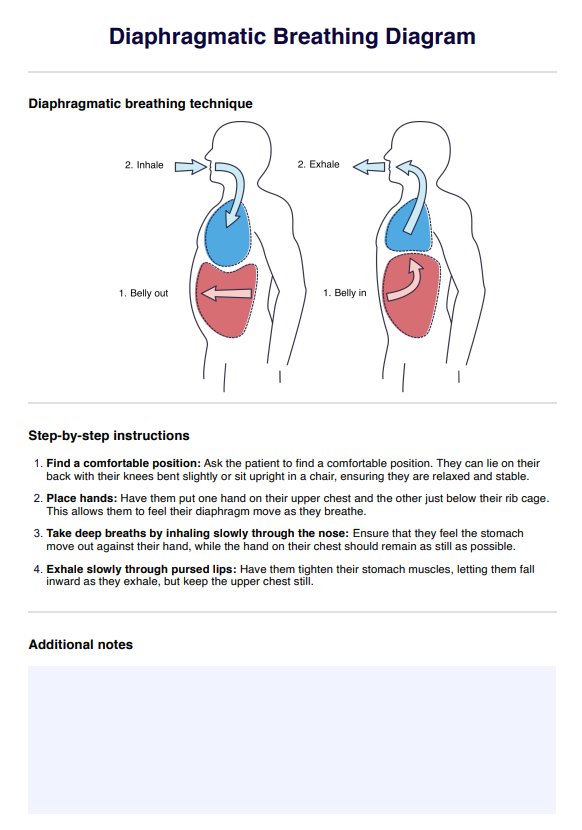
To help your patient practice diaphragmatic and deep breathing techniques, they follow these steps:
- Find a comfortable position: They can lie on their back with their knees bent slightly or sit upright in a chair, ensuring they are relaxed and stable.
- Place hands: Have them put one hand on their upper chest and the other just below their rib cage. This allows them to feel their diaphragm move as they breathe.
- Take deep breaths by inhaling slowly through the nose: Feel the stomach move out against their hand, while the hand on their chest should remain as still as possible.
- Exhale slowly through pursed lips: Have them tighten their stomach muscles, letting them fall inward as they exhale, but keep the upper chest still.
Should a patient need a visual, you can give them a copy of the diaphragmatic breathing exercises PDF or the diaphragmatic breathing handout PDF available in this guide.
When is it best to recommend diaphragmatic breathing?
Diaphragmatic breathing exercises can be practiced at any time and are especially beneficial during periods of stress or anxiety, as they activate the parasympathetic nervous system. It is also useful when preparing for tasks that require concentration or physical exertion, particularly in stressful situations. Practicing this deep breathing technique regularly can help manage symptoms of stress-related disorders and improve overall respiratory and cardiovascular health.









