
People with different anxiety disorders often have trouble sleeping. This includes those with generalized anxiety disorder (GAD), obsessive-compulsive disorder (OCD), and post-traumatic stress disorder (PTSD). These anxiety issues can make it hard to fall asleep, stay asleep, or get restful sleep, making their anxiety worse and affecting their daily life.
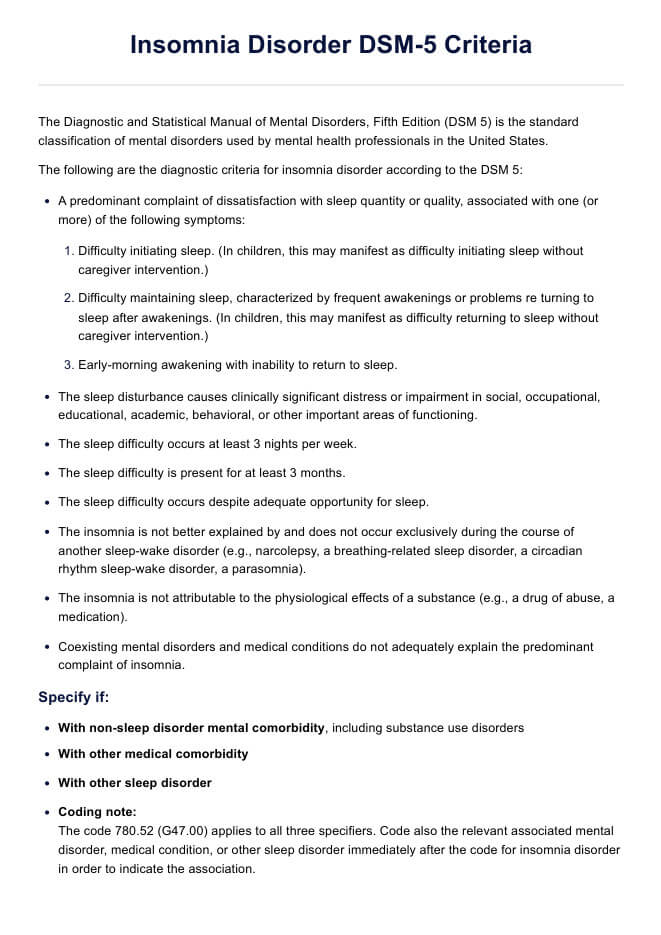



Insomnia Disorder DSM-5 Criteria
Learn about Insomnia Disorder DSM-5 Criteria to help you diagnose and treat insomnia disorder.

Use Template
Insomnia Disorder DSM-5 Criteria Template
Commonly asked questions
Obstructive sleep apnea is when the airway becomes blocked during sleep, causing an individual to stop breathing temporarily. If untreated, this can lead to loud snoring, daytime tiredness, and other health problems. Often, this sleep disorder co-exists with insomnia.
Yes, insomnia is often linked to major depressive disorder and is considered its core symptom. People with depression frequently have trouble falling asleep or staying asleep.










EHR and practice management software
Get started for free
*No credit card required
Free
$0/usd
Unlimited clients
Telehealth
1GB of storage
Client portal text
Automated billing and online payments