
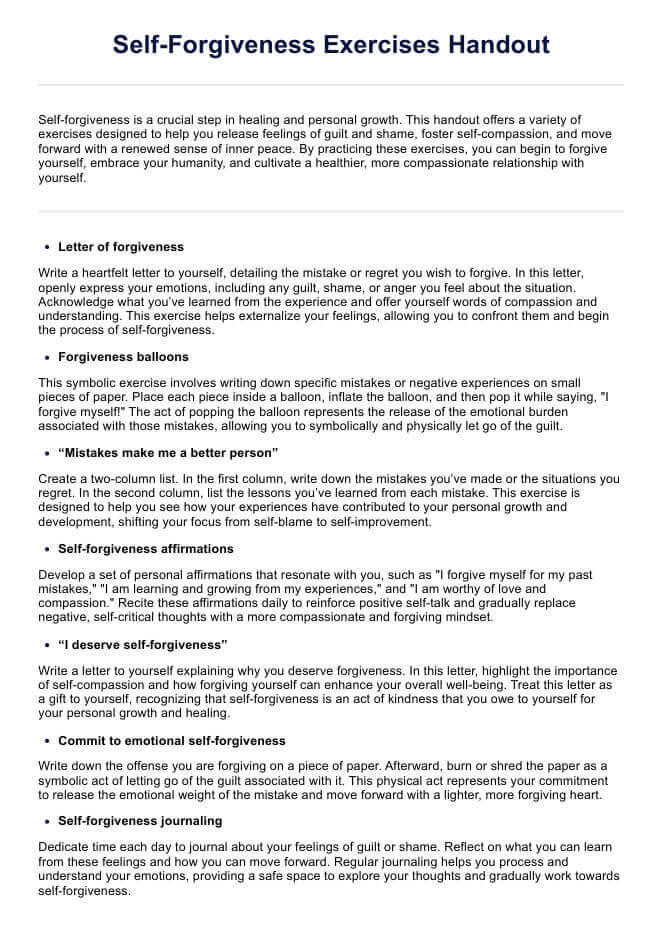




Importance of self-forgiveness
Self-forgiveness is a critical aspect of emotional healing and personal growth. It involves recognizing and accepting responsibility for past actions or mistakes while letting go of negative feelings, self-judgment, and guilt. Self-forgiveness allows individuals to release the burdens of shame and regret, which can hinder their ability to move forward.
Practicing self-forgiveness is essential for maintaining mental and emotional well-being. Holding onto guilt or self-blame can lead to a negative self-image, low self-esteem, and even mental health issues such as depression and anxiety. By forgiving oneself, individuals can break free from these destructive patterns and cultivate self-compassion.
Moreover, the self-forgiveness process is important for fostering resilience. It encourages individuals to learn from their mistakes rather than being defined by them, enabling them to grow and improve over time. This ability to forgive oneself enhances personal development and strengthens one's capacity to cope with future challenges and setbacks.
Self-forgiveness can also play a vital role in relationships. When individuals accept responsibility for their actions and forgive themselves, they are likelier to extend forgiveness and understanding to others. This, in turn, can lead to stronger, more supportive relationships.









