Types of trauma responses
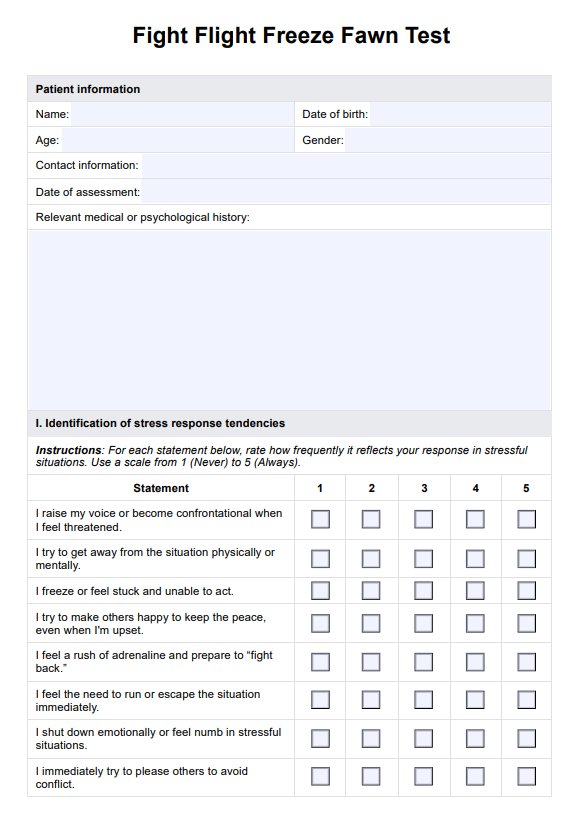
Trauma responses are instinctive survival responses that the brain activates when a person perceives a serious threat. These responses help the individual deal with fear, danger, or harm. The four primary types—fight, flight, freeze, and fawn—are automatic reactions shaped by biology, past experiences, and context (Guy-Evans, 2023). Understanding how each type functions allows clinicians to identify patterns in behavior and develop trauma-informed strategies to support health, boundaries, and recovery.
Fight
The fight response activates when a person attempts to confront the threat's source directly. This trauma response is often associated with anger, defensiveness, or intense determination to act and regain control. Individuals in a fight response may appear tense, easily irritated, or reactive.
While it can be protective in immediate danger, it may become problematic if used in non-threatening situations, leading to conflict in relationships or health struggles. Clinicians should help patients identify when this survival response is helpful and when it causes more harm than good.
Flight
The flight response drives a person to avoid or escape perceived danger. This can manifest as restlessness, panic, or anxiety and may involve physical withdrawal or mental disengagement. People with a dominant flight response may struggle with chronic worry, trouble concentrating, or excessive activity as a way to cope. Breathing may become rapid, and the person may feel cold or overwhelmed.
While fleeing can be adaptive in real danger, it may lead to avoidance of everyday stressors. Identifying this pattern helps guide treatment toward building safe boundaries and healthy coping skills.
Freeze
The freeze response occurs when a person becomes immobilized in the face of trauma or fear. It is a biological shutdown mechanism in which the body and mind pause to avoid detection or reduce harm. Individuals in a freeze response may feel stuck, dissociated, numb, or disconnected. Physical signs include shallow breathing, a slowed heart rate, or feeling cold.
While this survival response may protect the person during overwhelming events, it often later interferes with action and communication. Treatment should focus on helping the person gently re-engage with sensations, emotions, and decision-making.
Fawn
The fawn response involves appeasing others to reduce the threat of conflict or rejection. A person in this mode may struggle to set boundaries, overextend themselves, or suppress their needs to maintain peace. This trauma response is typical in individuals with histories of relational trauma, where pleasing others was a learned survival tactic to avoid harm.
Fawning may look like compliance, excessive helpfulness, or fear of upsetting others. Clinicians can help individuals identify when this response is at play and work toward assertiveness, self-worth, and healthier relational patterns.