
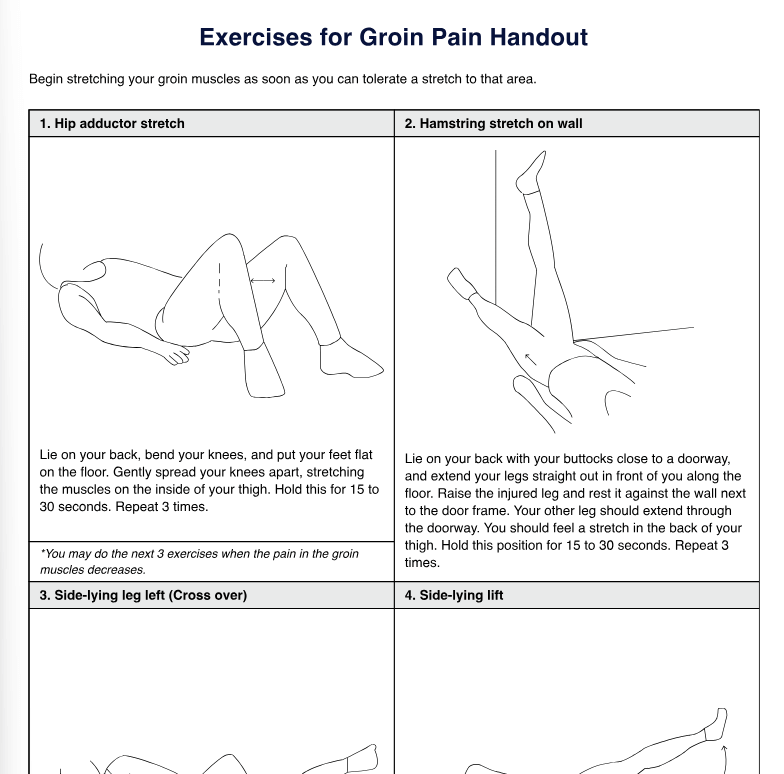




What is groin pain?
Groin pain is discomfort in the region where the inner inside of the thigh meets the lower abdomen. It often results from a strain or injury to the muscles, tendons, or ligaments in this area. The groin muscles are crucial in facilitating leg movement and stabilization, making them susceptible to injury during physical activities.
Causes of groin pain
Groin pain can arise from various causes, including:
- Strains: Overstretching or tearing of the adductor muscles, particularly the adductor magnus and the sartorius, commonly occur during activities like running, jumping, or sudden changes in direction.
- Sports injuries: High-impact sports such as soccer, hockey, and football frequently lead to groin injuries due to sudden movements and forceful leg activities.
- Overuse: Repetitive stress on the groin muscles from activities like cycling or long-distance running can lead to overuse injuries.
- Other conditions: Hernias, hip joint issues, and infections can cause groin pain.
Symptoms of groin pain
Common symptoms of groin pain include:
- Pain or tenderness: Discomfort along the inner thigh or groin area may worsen when bringing the legs together.
- Difficulty moving: Pain when lifting the knee or performing specific movements, such as walking, running, or jumping.
- Swelling or bruising: Visible signs of injury, such as swelling or bruising in the affected area.
- Limited range of motion: Reduced ability to move the leg freely due to pain or stiffness.
Identifying the cause and symptoms of groin pain is essential for effective treatment and rehabilitation. Accurate diagnosis by a healthcare provider ensures appropriate management and recovery strategies.









