




What is lumbar multifidus muscle dysfunction?
Lumbar multifidus muscle dysfunction refers to issues arising in the multifidus and lumbar muscles, which are crucial for stabilizing the vertebrae along the spine. This dysfunction often manifests in reduced muscle function and pain in the lower back. It can be triggered by acute injuries, such as sudden movement or lifting heavy objects, or chronic conditions, including poor posture or degenerative disc disease.
Lumbar multifidus muscle dysfunction symptoms include localized pain, muscle stiffness, and a reduced range of motion in the lower back. Patients might have pain, and experience increased discomfort when engaging in activities that strain the lower back. This dysfunction is most commonly diagnosed in individuals who engage in physically demanding jobs, athletes, older adults, and those with a history of back injuries or conditions.
How to identify lumbar multifidus dysfunction
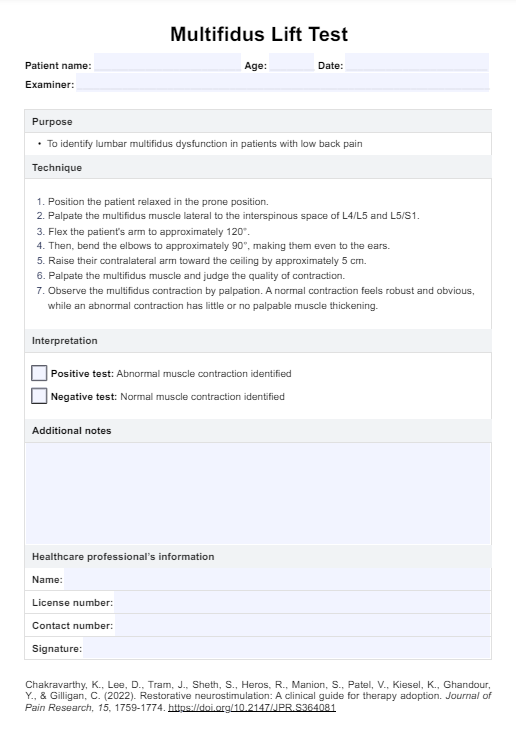
Identifying lumbar multifidus dysfunction typically involves clinical examination and specific testing. One critical test used is the Multifidus Lift Test, which assesses the strength and activation of the lumbar multifidus muscles during back movements. During this test, patients lie face down, and the practitioner palpates the muscles near the spine as the patient attempts to lift the affected limb or extend the back. A failure to properly activate these muscles indicates dysfunction.
Additionally, imaging tests such as magnetic resonance imaging (MRI) can be utilized to observe the multifidus muscles' structure and condition, helping to confirm a diagnosis. Physical therapists also look for signs of asymmetry in muscle size or strength and abnormal muscle contraction between the two sides of the body, which often accompanies this dysfunction.









