





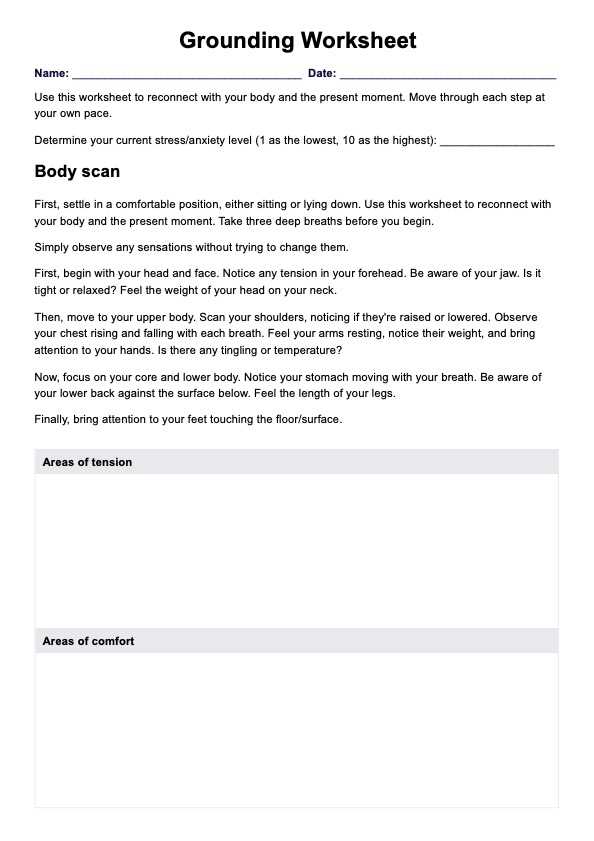




What is grounding?
Grounding skills are powerful tools that help individuals anchor themselves in the present moment, reducing feelings of anxiety and enhancing a sense of safety and calm. These techniques involve focusing on as many items and sensations in one's immediate environment as possible, effectively diverting the mind from distressing thoughts. By practicing grounding exercises regularly, individuals can cultivate a reliable way to engage with the present moment, making it easier to navigate stressful situations with a sense of control and tranquility.
What are grounding techniques?
Grounding techniques are practical and mental exercises designed to help individuals focus on the present moment and body awareness, reducing feelings of anxiety and distress.
Regular grounding skills can enhance their effectiveness, providing reliable support during stress. Here are grounding techniques to include in therapy sessions for your patients:
- 5-4-3-2-1 technique: The patient identifies five things they can see, four things they can touch, three things they can hear, two things they can smell, and one thing they can taste. This technique engages multiple senses and focuses the attention on the present moment.
- Deep breathing: Encourage clients to breathe slowly through their nose for a count of four, hold for a count of four, exhale through the mouth for a count of four, and hold again for four. Deep breathing helps calm the body and mind by reducing physical symptoms of anxiety.
- Physical sensation: Let the individual hold an ice cube, run their hands under cold water, or squeeze a stress ball. Focusing on these physical sensations is a practical tool to shift attention away from anxious thoughts and back to the present moment.
- Movement: Encourage your patient to engage in physical activities like walking, stretching, or yoga. Movement helps ground oneself by making the person aware of their body and its actions, reducing stress and anxiety.
- Counting: Tell the patient to count backward from 100 in increments of three or count items around them, such as ceiling tiles or trees. Counting is a simple yet effective way to divert their focus from anxiety to a structured task.









