


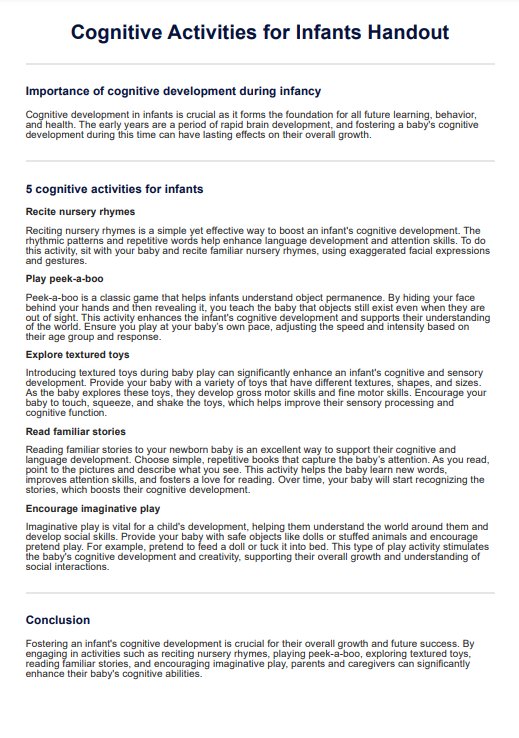




Importance of infants developing good cognitive abilities
Cognitive development in infants is crucial as it forms the foundation for all future learning, behavior, and health. The early years are a period of rapid brain development, and fostering a baby's cognitive development during this time can have lasting effects on their overall growth. Cognitive development encompasses a child's ability to think, learn, and solve problems, which are essential skills throughout life.
Understanding infant and toddler development is vital for parents and caregivers to provide appropriate cognitive development activities. Activities like nursery rhymes and play activities help stimulate a baby’s brain, improving listening skills and fine motor skills. These activities promote cognitive development by engaging the child's cognitive skills, which are fundamental for reaching developmental milestones.
Early childhood education plays a significant role in boosting cognitive development. It provides structured environments where a child's cognitive development is nurtured through various interactive and educational experiences. For example, participating in cognitive development activities in a preschool setting can significantly enhance a child's cognitive skills, preparing them for future academic success.
Outcomes of weak cognitive abilities in infants
Weak cognitive capabilities in infants can lead to significant developmental delays and challenges in learning and social interactions. These issues may manifest as difficulties in language acquisition, problem-solving, and attention span. As a result, children with underdeveloped cognitive skills may struggle with academic performance and social integration in early childhood education settings. Early identification and intervention are crucial to address these potential problems and promote healthy cognitive development in infants.









