What is a culturagram?
A culturagram is a family assessment tool designed to help professionals, especially social workers and healthcare providers, understand and address the cultural needs of increasingly diverse family systems. It captures essential information about a family's culture, including values, beliefs, and experiences that influence their interactions with healthcare, educational, and social services.
Which professionals use this and for what?
Culturagrams are primarily used by social workers, therapists, and healthcare professionals. They are utilized to individualize care and support for immigrant families, culturally diverse families, and others, navigating the complexities of maintaining their cultural identity while integrating into a new societal context. These tools are crucial in building culturally competent practices that respect and incorporate an individual's cultural background.
What specific information does it gather?
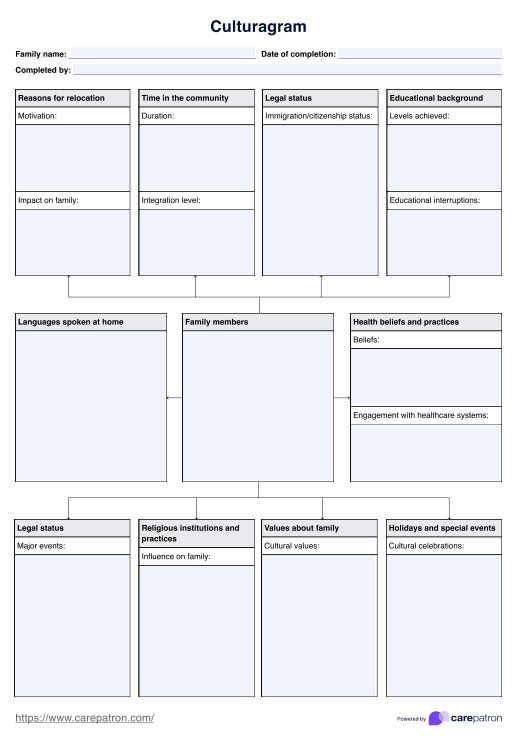
A culturagram systematically gathers detailed information across ten critical areas to comprehensively view a family's cultural background and current situation. This data is crucial for professionals working with culturally diverse families to offer tailored and effective support. Here’s what the culturagram specifically examines:
- Reasons for relocation: Investigate the motives behind a family's migration, including seeking better economic opportunities, escaping conflicts or safety concerns, or reuniting with other family members. This understanding helps contextualize their current challenges and aspirations.
- Time in the community: Assesses how long the family has resided in their current location and gauges their degree of social and cultural integration. This can influence their access to community resources and social support systems.
- Legal status: This section details the family's immigration or citizenship status, highlighting potential legal challenges that might impact their stability or access to services such as healthcare and education.
- Educational background: This section captures the educational levels within the family and notes any disruptions due to migration. This can affect employment opportunities and social mobility.
- Language spoken at home: This section identifies the primary languages spoken within the family unit, offering insights into possible communication barriers affecting interactions with schools, workplaces, and healthcare providers.
- Health beliefs and practices: This section explores the family’s cultural beliefs about health and medical treatments, which can significantly influence their engagement with healthcare systems and acceptance of medical interventions.
- Crisis events: Documents significant life events or traumas the family has experienced and notes cultural methods of coping or crisis management. Understanding these responses is vital for providing culturally sensitive support during challenging times.
- Religious institutions and practices: This course examines the role of religion in family life and decision-making processes, which can have a major influence on values and behaviors.
- Values about family: This course investigates core cultural values regarding family dynamics, including the roles of elders, child-rearing practices, and expectations of gender roles. These values are crucial for personal interactions and understanding family structure.
- Holidays and special events: Highlights important cultural and religious celebrations significant to the family, offering opportunities to connect with their heritage and maintain cultural identity.
By gathering this specific information about cross-cultural practice, a culturegram allows professionals to better understand and address the unique needs of increasingly culturally diverse families, ensuring a more individualized and culturally competent practice.