









What is substance-induced psychosis?
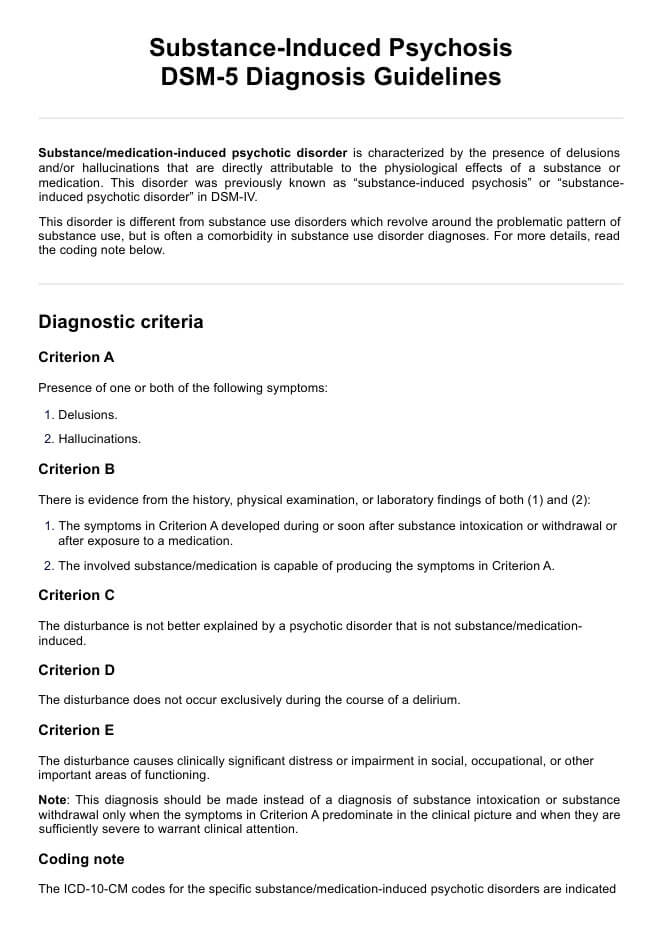
Substance-induced psychosis is the Diagnostic and Statistical Manual of Mental Disorders, fourth edition (DSM-IV) name for what is now known as substance/medication-induced psychotic disorder in the fifth edition (DSM-5). It is characterized by the presence of delusions and/or hallucinations caused directly by the physiological effects of a substance or medication. As such, it is not a primary psychosis, but rateher a secondary or substance-induced psychosis. It also differs from substance use disorder in that substance use disorder is about the problematic pattern of use, while substance/medication-induced psychotic disorder is about the psychotic effects caused by using the substance.
The symptoms of this mental illness include seeing or hearing things that aren't there (hallucinations) and holding false beliefs despite clear evidence to the contrary (delusions). These symptoms typically develop during or soon after substance intoxication or withdrawal, or after exposure to a medication.
The disorder can be diagnosed when these symptoms arise in connection with medication use or substance abuse. The causes include a variety of substances such as alcohol, cannabis, hallucinogens, inhalants, sedatives, hypnotics, anxiolytics, stimulants, and certain medications like anticholinergics, anticonvulsants, and corticosteroids.
The consequences of substance/medication-induced psychotic disorder can be severe, often leading to significant distress and impairment in social, occupational, or other important areas of functioning. This condition is frequently comorbid with substance use disorders and other psychiatric conditions, complicating diagnosis and treatment.









