
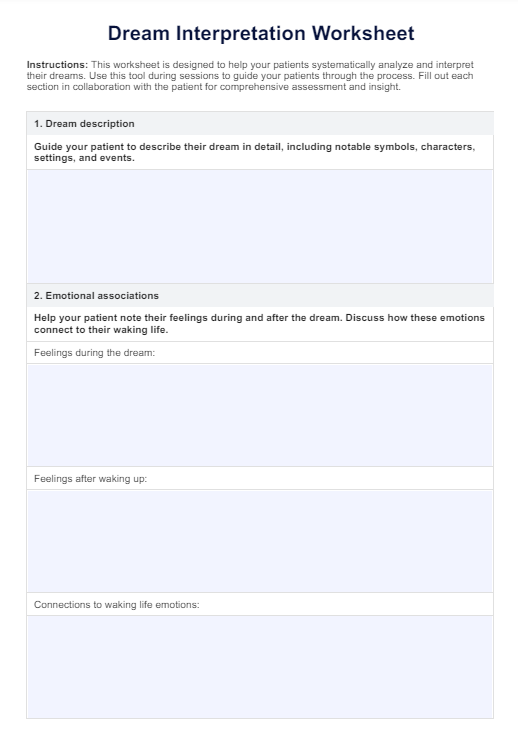




What are dream interpretations?
Dream interpretation involves analyzing and understanding dreams' content and symbolism to uncover deeper meanings and insights about waking life. By exploring dreams, you can reveal hidden thoughts, emotions, and desires that might influence your reality.
Theories that inform dream interpretations
There are many different theories that have been developed to try and explain the meaning behind our dreams:
Freud's interpretation of dreams
In his seminal work, A General Introduction to Psychoanalysis, Freud first introduced his theory of psychoanalysis, focusing on the role of the unconscious mind in human behavior and mental processes. Freud proposed that dreams could provide valuable insight into an individual's unconscious desires and conflicts, which were often repressed or hidden from conscious awareness. He believed that dreams are a form of "wish fulfillment," representing the unconscious desires, thoughts, and motivations that our conscious mind represses (1920).
Activation-synthesis theory
The activation-synthesis theory, proposed by psychiatrists Hobson and McCarley in 1977, suggests that dreams are a result of random electrical impulses within the brainstem. These impulses activate the brain's higher cognitive centers, which then try to make sense of them by creating a narrative or story (Hobson & McCarley, 1977).
Jung's theory of dream analysis
Psychologist Carl Jung also had his own interpretation of dreams, emphasizing the importance of archetypes and symbolism in dream content. In Jungian psychology, dreams were a way for the individual to access their collective unconscious, which contained universal symbolic meanings and images (Jung, 2014).
How is dream interpretation used in psychology and therapy?
In psychology and therapy, dream interpretation is a tool for helping individuals explore their inner world, understand their emotions, and address psychological issues. Therapists may discuss dreams with their clients to uncover hidden fears, desires, and conflicts, facilitating a deeper understanding of their waking lives. By interpreting dreams, therapists can guide clients towards self-awareness and emotional healing.
Common dream interpretation examples
Dreams often feature recurring themes and symbols that carry specific meanings. Here are a few common examples:
- Falling: Often interpreted as a lack of control or fear of failure in waking life. It may indicate feelings of insecurity or anxiety about a situation.
- Being chased: This can symbolize avoidance or fear of confronting a particular issue or emotion. It may suggest that there is something in your life that you need to address.
- Flying: Flying dreams can represent a desire for freedom or escape. They may indicate that you feel liberated or have control over your life.
- Losing teeth: Commonly associated with feelings of powerlessness or concerns about appearance and self-image. It may also signify fear of aging or loss of control.









