





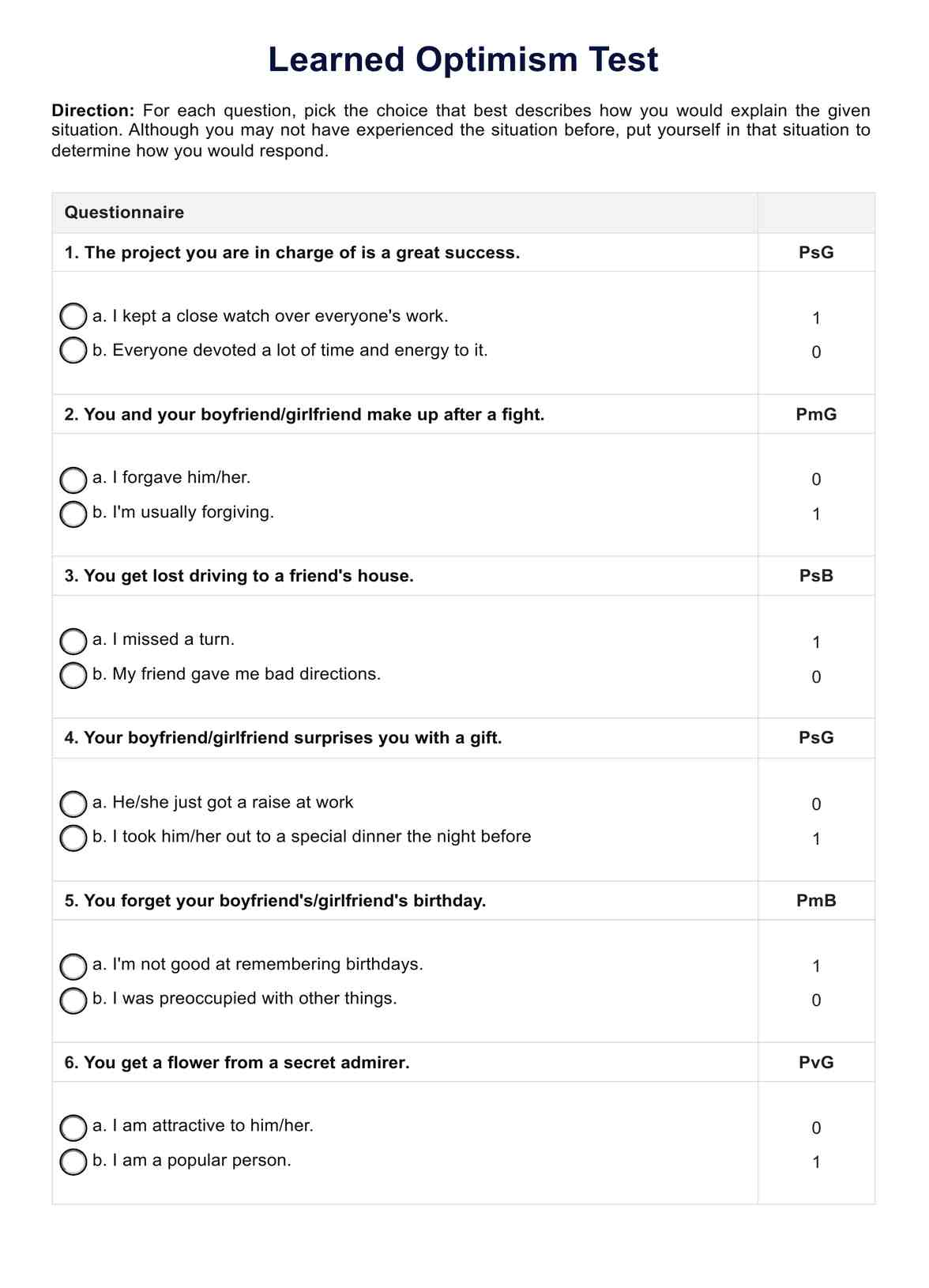




What is learned optimism?
The learned optimism concept, coined by Martin Seligman in positive psychology, suggests that individuals can develop an optimistic viewpoint. According to Seligman, adopting a more optimistic stance can significantly improve well-being (Seligman, 2006).
By cultivating learned optimism, individuals can reframe their thinking patterns, challenge negative self-talk, and develop a greater sense of agency and control over their lives. Individuals can gradually shift towards a more optimistic outlook through cognitive restructuring, positive visualization, gratitude exercises, and problem-solving skills training.
Learned optimism provides greater emotional resilience, psychological well-being, and overall life satisfaction. It empowers individuals to approach life's challenges with greater confidence, flexibility, and positivity, leading to a more fulfilling and meaningful existence.
How do psychologists integrate this into their work?
Psychologists employ learned optimism techniques across various domains of their practice, integrating them into therapeutic approaches like cognitive-behavioral therapy (CBT), where clients are guided to identify and challenge negative thought patterns, reframing them towards a more optimistic perspective.
In treating depression and anxiety, optimism interventions play a pivotal role, significantly alleviating symptoms by bolstering resilience and enhancing coping skills through learned optimism exercises. Group therapy settings provide fertile ground for practicing optimism through interactive activities, role-playing, and situational games, with the added benefit of social support and modeling reinforcing optimistic thinking.
Why is optimism important?
Optimism manifests in improved physical health, as optimists tend to exhibit stronger cardiovascular health, bolstered immune systems, and reduced levels of stress and pain, attributable to their engagement in healthier behaviors like regular exercise, balanced nutrition, and refraining from smoking, ultimately contributing to increased longevity.
Optimism intertwines with mental well-being, correlating with lower rates of depression and anxiety, fostering happiness, elevated self-esteem, and heightened life satisfaction while nurturing resilience in the face of adversity.
This positive mindset also translates into greater achievement, propelling optimists towards academic and professional success through enhanced persistence in goal pursuit and motivation for positive action. Optimism fosters enriched social relationships, as optimists are perceived as more likable, experience fewer social rejections, and enjoy greater satisfaction and longevity in romantic partnerships, facilitated by constructive problem-solving and a perceived sense of robust social support. Lastly, optimism facilitates effective coping strategies, empowering individuals to tackle challenges head-on with solution-focused approaches, thereby promoting faster recovery from setbacks.









