




What is bulimia nervosa?
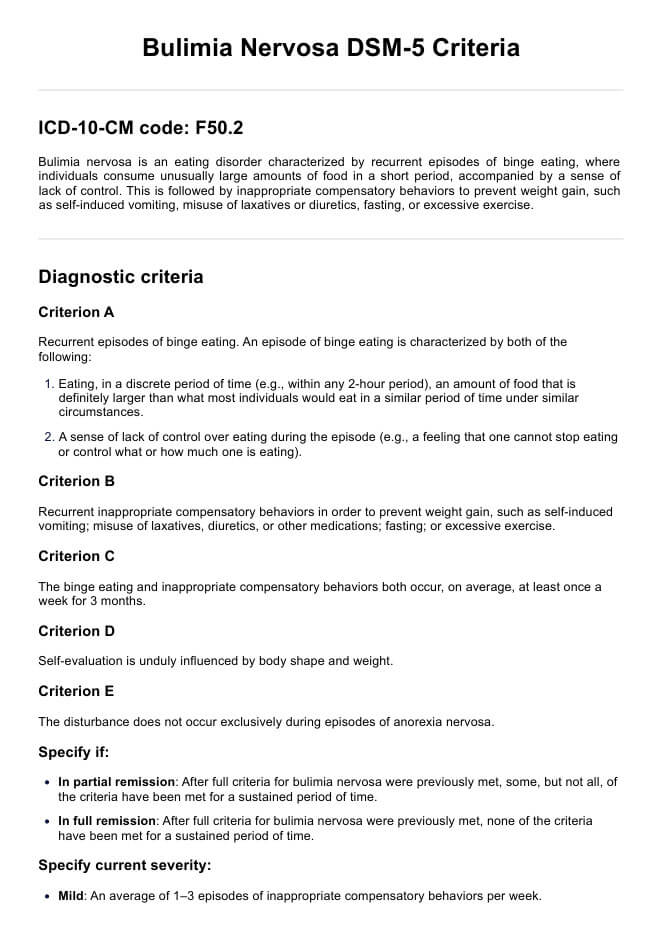
Bulimia nervosa is one of the eating disorders defined in the Diagnostic and Statistical Manual of Mental Disorders. It is characterized by recurrent episodes of binge eating followed by inappropriate compensatory behaviors to prevent weight gain. These behaviors include self-induced vomiting, misuse of laxatives, diuretics, or other medications, fasting, or excessive exercise. Individuals with bulimia nervosa often feel a lack of control over their eating during binge episodes and place an excessive emphasis on body shape and weight in their self-evaluation.
There are two subtypes of bulimia nervosa: the purging type and the non-purging type. The purging type involves regular self-induced vomiting or the misuse of laxatives, diuretics, or enemas. The non-purging type involves other inappropriate compensatory behaviors, such as fasting or excessive exercise, but does not regularly engage in purging behaviors.
Bulimia nervosa differs from anorexia nervosa in that individuals with bulimia nervosa are typically within the normal weight or overweight range, whereas individuals with anorexia nervosa are underweight. Additionally, anorexia nervosa involves a restriction of food intake leading to significantly low body weight, while bulimia nervosa involves episodes of binge eating followed by compensatory behaviors.









