








What is Acceptance and Commitment Therapy?
Acceptance and Commitment Therapy
Acceptance and Commitment Therapy is a powerful therapeutic approach that healthcare practitioners can utilize to help individuals overcome various psychological challenges, including relationship problems. With its emphasis on mindfulness, acceptance, and values-driven action, ACT provide a valuable framework for addressing issues such as judgmental thoughts within relationships, as seen in the specific tool "Judgmental Mind ACT Worksheet."
In the context of relationship problems, ACT promotes psychological flexibility, which is the ability to adapt and respond effectively to life's challenges. When clients struggle with judgmental thoughts, especially within relationships, these thoughts can strain connections, erode empathy, and hinder effective communication. ACT provides a structured and compassionate way to address these issues.
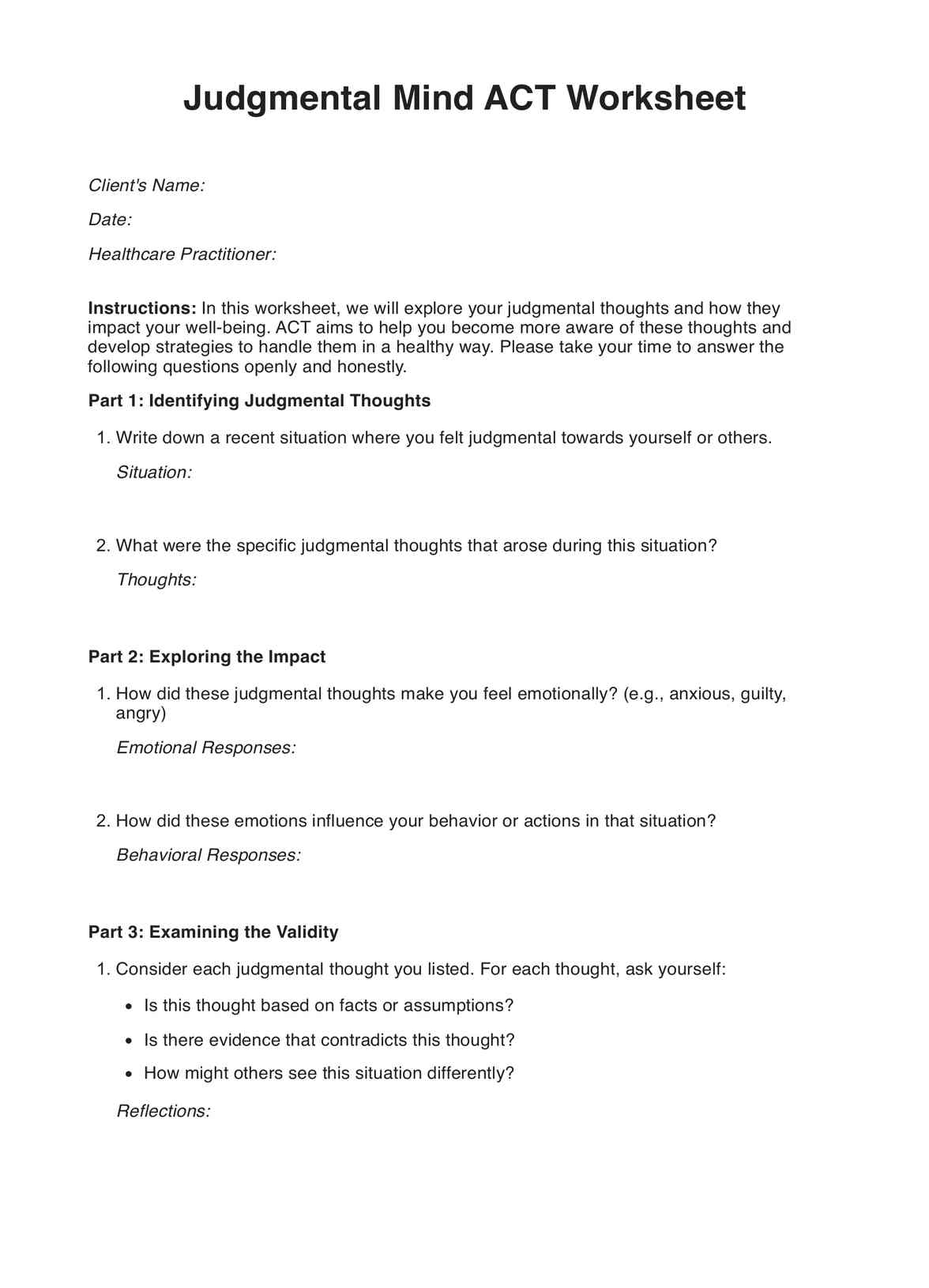
The Judgmental Mind ACT Worksheet is tailored to assist clients and practitioners in this process. It encourages individuals to identify judgmental thoughts, explore their impact on emotions and behaviors, and examine their validity. By practicing self-compassion and considering alternate perspectives, clients can reframe their critical thoughts and align them with their core values.
The ACT approach helps clients cultivate empathy, improve emotional regulation, and enhance communication skills in relationships. Clients can create a more open and accepting environment by addressing judgmental thoughts, fostering healthier connections, and reducing conflicts. This tool is particularly effective as it guides clients to break free from negative patterns and cultivate a more mindful, accepting, and compassionate approach to their relationships.
As healthcare practitioners, incorporating ACT techniques, such as the "Judgmental Mind ACT Worksheet," can significantly enrich your toolkit for addressing relationship problems. By assisting clients in overcoming judgmental thinking, you empower them to build stronger, more resilient connections, ultimately contributing to their overall well-being and the health of their relationships.









