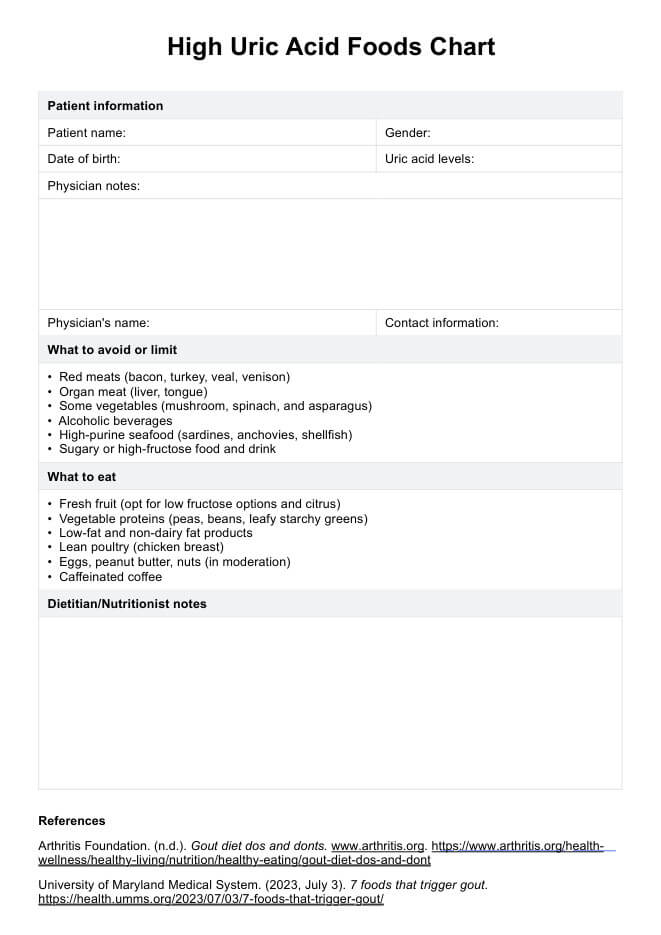
Diet recommendations to lower uric acid levels
Managing high uric acid levels involves making informed dietary choices, especially if the client is at risk of developing gout. Here are some valuable tips to help your clients regulate uric acid:
1. Limit purine-rich foods and reduce sugar intake
Advise your clients to limit high-purine foods, which contribute to increased blood uric acid levels. Recommend reducing or avoiding organ meats like liver, seafood such as anchovies, herring, shellfish, shrimp, sardines, red meat, and fatty foods like bacon. Explain that purines are released when the body breaks down fructose, leading to elevated uric acid levels. Specifically, they must avoid alcohol, sweets —especially those with high fructose corn syrup—sweet drinks, and carbonated beverages.
2. Follow a low-purine diet
Encourage clients to consume nuts in moderation and include fruits rich in Vitamin C, such as citrus. Recommend vegetables like gourds, particularly bitter gourds, and whole grains in pasta, wheat bread, and specific unsweetened cereals. Suggest fat-free or low-fat options like low-fat milk and non-dairy alternatives for beverages.
3. Stay hydrated
Emphasize the importance of adequate fluid intake for faster kidney elimination of uric acid. Encourage clients to carry a water bottle to maintain consistent hydration.
4. Limit alcohol
Advise clients that alcohol consumption can trigger elevated uric acid levels and contribute to dehydration, both of which can exacerbate symptoms.
5. Manage weight
Inform clients that excess weight increases the risk of gout. If they have already been diagnosed with gout, maintaining a healthy weight can reduce the frequency of flare-ups.