




What is Vertebrobasilar insufficiency?
Vertebrobasilar insufficiency (VBI) refers to a condition characterized by decreased blood flow through the vertebral arteries, which supply the brainstem, cerebellum, and occipital lobes. These arteries, running through the cervical spine, are crucial for maintaining adequate blood flow to the posterior part of the brain. VBI often arises due to cervical arterial dysfunction, which can be exacerbated by factors such as cervical spine manipulation or compression.
Causes of vertebrobasilar insufficiency
VBI can stem from several underlying causes, primarily affecting the vertebral arteries that supply blood to the brainstem and cerebellum. Common triggers include cervical spine disorders such as cervical spondylosis, cervical spine trauma, or anatomical variations that impede normal blood flow.
Additionally, activities like cervical spine manipulation or prolonged neck positions can exacerbate VBI symptoms and transient ischaemic attack by compressing or compromising the vertebral artery's integrity.
Risk factors of vertebrobasilar insufficiency
Several factors increase the likelihood of developing vertebrobasilar insufficiency. Age plays a significant role, as older individuals are more prone to vascular changes and arterial stiffness. Conditions such as hypertension, diabetes, and hyperlipidemia contribute to vascular compromise, potentially leading to decreased blood flow through the vertebral arteries. Lifestyle factors like smoking and sedentary behavior can also exacerbate vascular health issues. Additionally, anatomical variations in the cervical spine or previous neck trauma increase the risk of VBI.
Symptoms of vertebrobasilar insufficiency
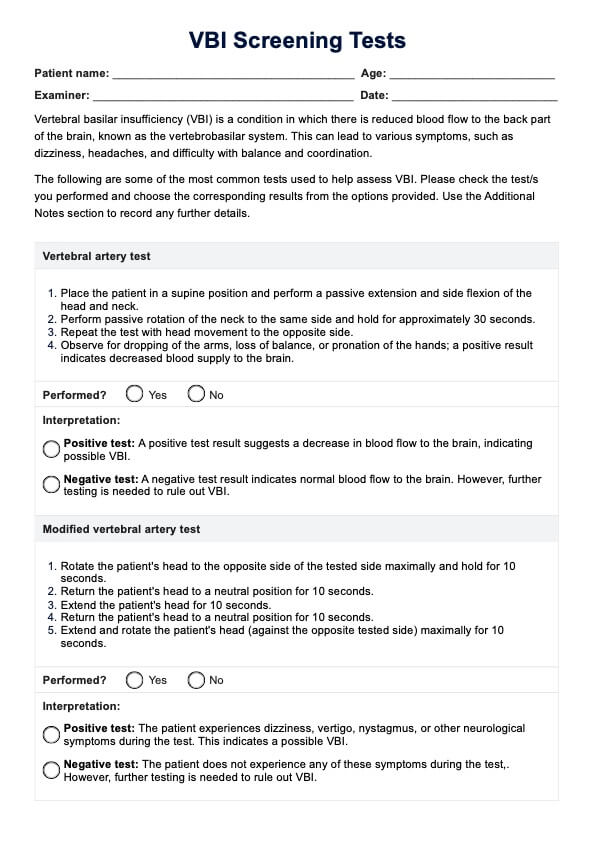
Symptoms of VBI may include dizziness, vertigo, diplopia, dysarthria, and transient ischemic attacks (TIAs). A patient tests positive for VBI when maneuvers like cervical spine rotation provoke symptoms due to compromised vertebral artery flow. Physical therapy plays a pivotal role in managing VBI, focusing on improving cervical spine stability and optimizing blood flow to the brain.









