


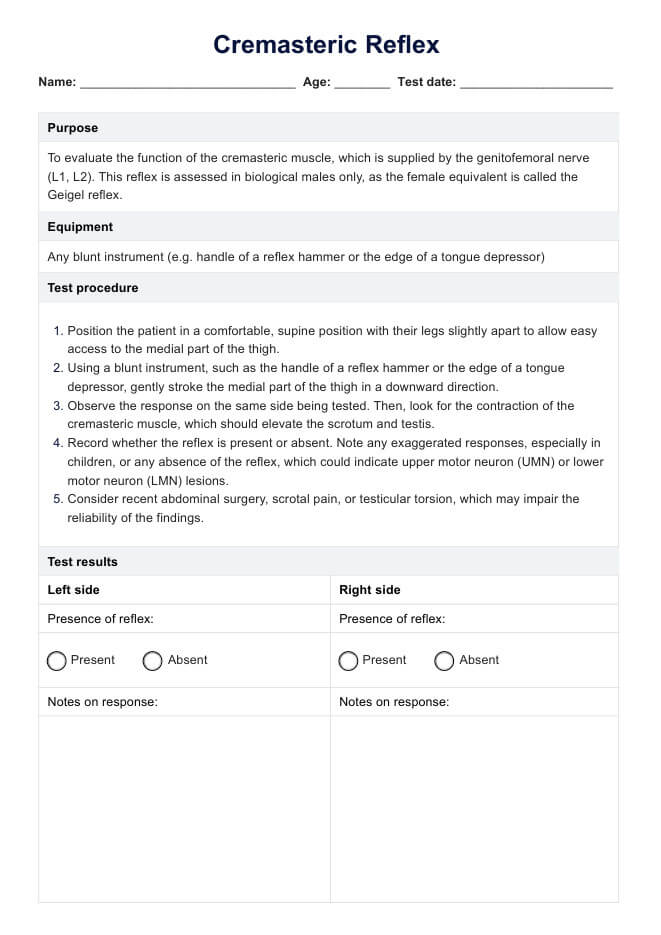




What is the Cremasteric Reflex?
The Cremasteric Reflex is a superficial reflex observed in males, assessing the function of the cremaster muscle and the cremaster reflex, which is innervated by the genitofemoral nerve (L1, L2). The cremaster reflex is a physiologic superficial reflex elicited by stroking the inner thigh, causing the cremaster muscle to contract and pull the scrotum and testis upwards on the stimulated side (Mellick et al., 2021). This reflex is often used to evaluate the integrity of the spinal cord at the L1-L2 level and to diagnose potential neurological issues.
In females, the equivalent response is called the Geigel reflex, which involves the contraction of muscle fibers above the superior border of the inguinal ligament. Although it is more commonly tested in males, understanding the Cremasteric Reflex is crucial for diagnosing conditions such as testicular torsion, where the reflex might be absent, or in cases of recent abdominal surgery or scrotal pain, which can affect the reflex’s reliability (Mellick et al., 2021).
How to check for the Cremasteric Reflex?
To check for the Cremasteric Reflex:
- Position the patient in a comfortable supine position with their legs slightly apart to allow easy access to the medial part of the thigh.
- Using a blunt instrument, such as the handle of a reflex hammer or the edge of a tongue depressor, gently stroke the medial part of the thigh in a downward direction.
The normal response in males is the contraction of the cremasteric muscle, resulting in the elevation of the scrotum and testis on the side being tested. This response is due to the innervation by the sensory fibers and motor fibers of the genitofemoral nerve, which originates from the L1 and L2 spinal nerve nuclei.
When conducting the test, it is essential to note that children might show an exaggerated response. At the same time, recent abdominal surgery, scrotal pain, and testicular torsion can impair the reliability of the findings. The reflex is graded as either present or absent, and its absence could indicate upper motor neuron (UMN) or lower motor neuron (LMN) lesions. Accurate observation and recording are crucial for proper diagnosis and subsequent treatment.









