




What are compression fractures?
Compression fractures occur when one or more bones in the spine (vertebrae) collapse. This can lead to significant pain, decreased height, and a hunched-forward posture known as kyphosis. These fractures are most commonly caused by osteoporosis, a condition where bones become weak and brittle, making them more susceptible to breaking from minor stress or trauma.
Other causes include trauma from falls or accidents, metastatic cancer that weakens the bones, and certain diseases that affect bone strength. Moreover, symptoms typically include sudden onset of back pain, especially when standing or walking, and the pain often decreases when lying down.
How to assess vertebral compression fractures
Assessing vertebral fractures involves a combination of patient history, physical examination, and imaging studies. During the patient history intake, healthcare providers look for risk factors such as age, osteoporosis, history of cancer, or recent trauma. Physical examination includes checking for tenderness over the vertebrae, assessing spinal alignment, and looking for any signs of neurological impairment, such as weakness or numbness.
Imaging studies are crucial for confirming the diagnosis of vertebral fractures. X-rays are typically the first imaging modality used to identify fractures. If further detail is needed or if there is suspicion of more complex injuries, MRI or CT scans can provide more detailed views of the bone and surrounding tissues. These imaging tools help determine the extent of the fracture and plan appropriate treatment strategies.
What is the Closed Fist Percussion Test?
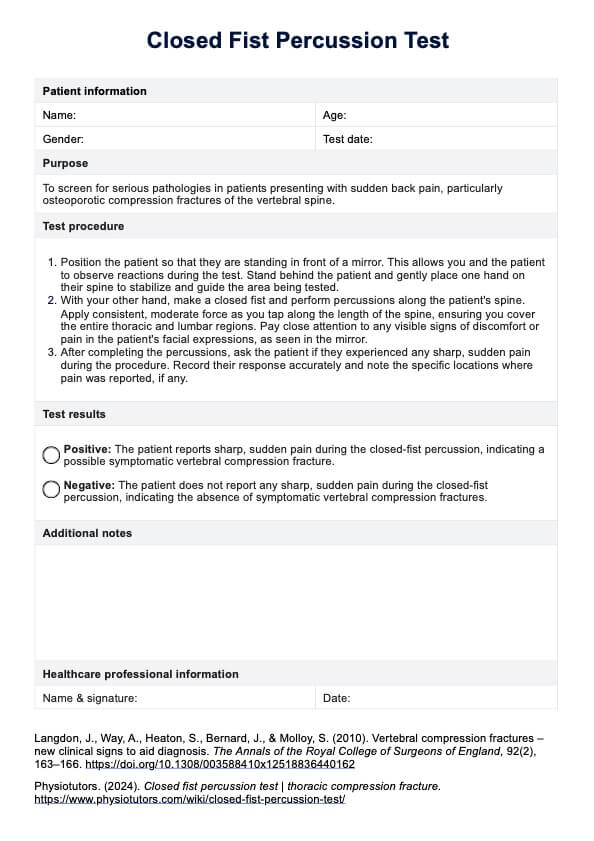
The Closed Fist Percussion Test is a physical examination technique to detect vertebral compression fractures. The test involves the examiner standing behind the patient and using a closed fist to apply percussions along the patient's spine. This method helps identify areas of the spine that might be tender or painful, which could indicate a fracture. The patient is asked to stand in front of a mirror to observe their reactions during the test.
According to Langdon et al. (2010), the closed-fist percussion test has a high sensitivity (87.5%) and specificity (90%) for detecting symptomatic vertebral fractures. This means the test is reliable for identifying patients with vertebral compression fractures and ruling out those who do not. A positive test result is indicated by the patient experiencing sharp, sudden pain during the percussions, which suggests the presence of a fracture. This simple yet effective test can be essential in screening patients with sudden back pain.
How to perform the Closed Fist Percussion Test
Performing the Closed Fist Percussion Test is straightforward and can be done quickly in a clinical setting. However, it is important to follow the steps carefully to ensure accurate results and avoid causing unnecessary discomfort to the patient.
First, position the patient to stand in front of a mirror. This allows you and the patient to observe reactions during the test. Stand behind the patient and gently place one hand on their spine to stabilize and guide the area being tested.
Next, with your other hand, make a closed fist and perform percussions along the patient’s spine. Apply consistent, moderate force as you tap along the length of the spine, ensuring you cover the entire thoracic and lumbar spine regions. Pay close attention to any visible signs of discomfort or pain in the patient’s facial expressions, as seen in the mirror.
Finally, after completing the percussions, ask the patient if they experienced any sharp, sudden pain during the procedure. This information will help determine if there are possible symptomatic vertebral compression fractures that require further investigation.









