




What is a Surprise Test?
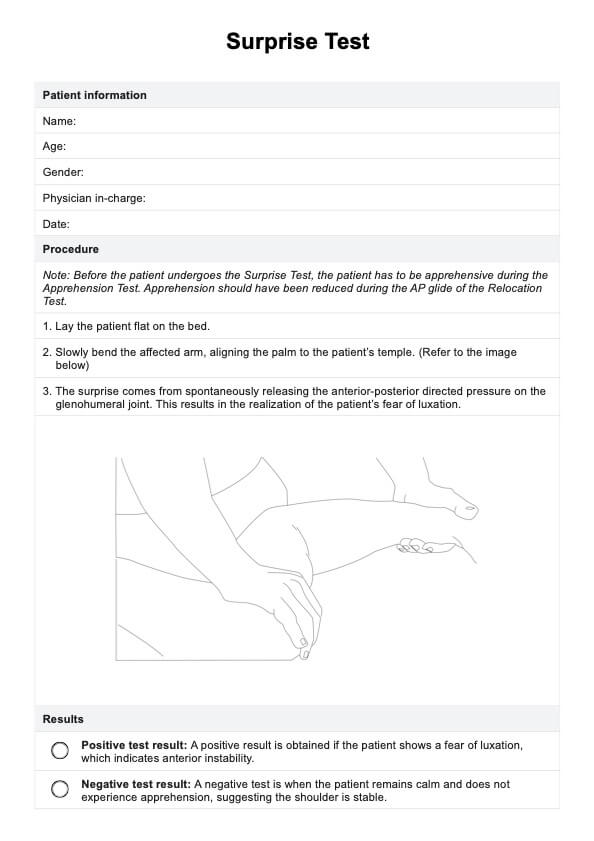
A Surprise Test, often used in diagnosing anterior shoulder instability, is a specific clinical assessment designed to evaluate the stability of the glenohumeral joint. This test, also known as the relocation test or release test, is performed to identify the presence of shoulder instability. During the Surprise Test, the patient's shoulder is placed in an external rotation and horizontal abduction position often called the apprehension test. At the end range of this motion, the examiner applies a posterior force to the shoulder, which can help alleviate pain and apprehension, indicating anterior instability.
The test concludes by suddenly releasing the applied force, which might lead to a return of symptoms such as pain or discomfort. This sudden change, or "surprise," can confirm the presence of anterior shoulder instability if the patient experiences a noticeable difference in their shoulder stability and pain levels.
Surprise Tests are highly specific and can be instrumental in diagnosing shoulder issues that are not always apparent in standard examinations. This method is particularly useful for patients experiencing unexplained shoulder pain or those who have had recurrent instability episodes. Accurate execution of this test on the last day of a clinical assessment can significantly enhance the understanding and management of shoulder conditions.
Is it the same as the relocation test?
The Surprise Test and the relocation test are closely related but not identical. Both are used to assess anterior shoulder instability by examining the stability of the glenohumeral joint. The relocation test involves placing the shoulder in an externally rotated and abducted position, often during the apprehension test, and then applying a posterior force to relieve symptoms of instability and pain. This maneuver helps confirm the presence of anterior instability by alleviating discomfort when the force is applied.
The Surprise Test, however, takes this assessment one step further. After the posterior force is applied during the relocation test, the examiner suddenly releases this force, creating a "surprise" for the patient. If the patient experiences a sudden return of pain or instability upon release, it further confirms the diagnosis of anterior shoulder instability. While the relocation test focuses on symptom relief with applied force, the Surprise Test emphasizes the response upon the sudden release of this force.









